
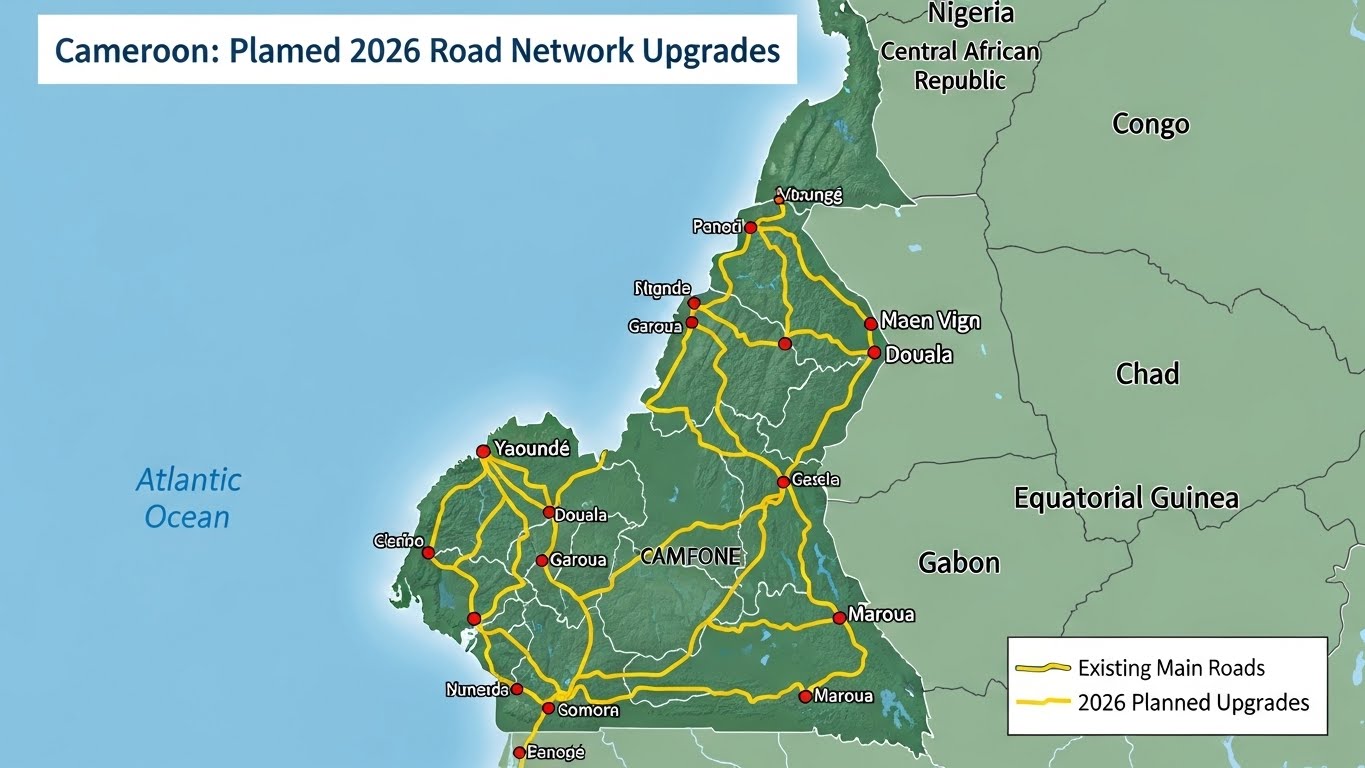
Cameroon’s 2026 budget earmarks billions for roads, communal maintenance, power access and more — a bold blueprint for national transformation. Dive into the details, projected benefits, challenges, and what it means for citizens and the economy.
Cameroon to Boost Key Infrastructure with 2026 Budget Plan
1. Introduction — Why 2026 Budget Matters
As nations around the world plan for the future, the newly proposed 2026 budget for Cameroon stands out not for modest tweaks — but for ambition. With a significant portion allocated to infrastructure improvements — especially roads and public works — the government is signaling a major push to repair decades-old deficits in connectivity, mobility, power, and urban services.
For a country whose economic potential is often curtailed by poor infrastructure, this could mark a turning point. The success or failure of these plans stands to affect millions of lives, economic opportunities, and Cameroon’s regional standing across Central and West Africa.
2. Cameroon’s Current Infrastructure Reality: Where Things Stand
Despite past efforts, Cameroon continues to struggle with a fragile infrastructure base. Key facts: HILLTOPVOICES ONLINE+1
- The national road network spans over 121,000 km, but only a small fraction is paved. Many rural roads remain unpaved or poorly maintained. cameroonintelligencereport.com+1
- As of 2025, funding shortages limited maintenance coverage to a mere 4.5% of required upkeep across the national network. businessincameroon.com+1
- In urban areas, basic infrastructure — including lighting, drainage, waste-management systems, and urban roads — remains subpar in many municipalities. businessincameroon.com+1
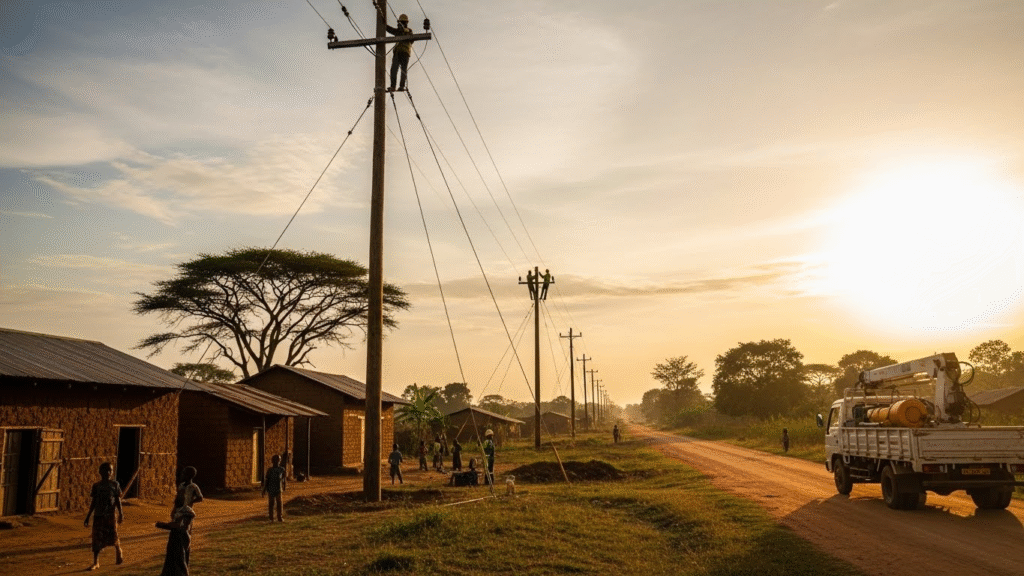
- Energy access remains uneven, especially in rural zones. While the government has ambitious power-access goals, many communities still lack reliable electricity and public services. HILLTOPVOICES ONLINE+1
These structural shortcomings have long hampered economic activity, especially in logistics, agriculture, rural development, and trade. The result: underutilized potential, inequality, and stagnation in large swathes of the population.
3. What the 2026 Budget Proposes: Big Numbers & Big Plans
According to the proposed 2026 finance bill, Cameroon’s government will significantly ramp up funding for public works and infrastructure projects — prioritizing roads, communal maintenance, and urban and rural connectivity. Ecofin Agency+2businessincameroon.com+2
Key figures include:
- Allocation of over 92% of the Public Works budget to road construction, rehabilitation, and maintenance. africasupplychainmag.com+1
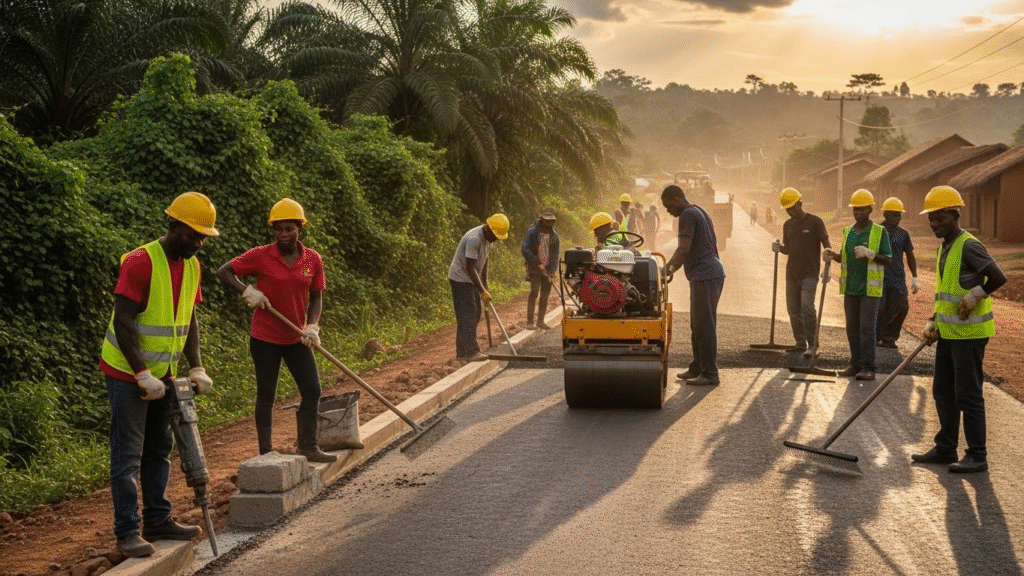
- Plans to pave nearly 650 km of new roads and rehabilitate key routes across the country in 2026. businessincameroon.com+1
- Increase communal roads maintenance funding by 38.5%, rising from the previous year’s budget. businessincameroon.com+1
- Expanded rural road stabilization schemes — treating unpaved roads, reinforcing earth-roads, improving access across remote zones. businessincameroon.com+1
- Continued investment in urban infrastructure — roads, lighting, drainage, public services — especially for major cities like Yaoundé and Douala. businessincameroon.com+1
- Power and energy goals aligned with long-term strategy: complementing projects such as hydroelectric power stations, grid expansion, and rural electrification under the national energy plan. Ecofin Agency+1
The 2026 budget reflects not just maintenance, but a renewed push for structural transformation — bridging rural-urban divides, improving commerce corridors, and strengthening connectivity across provinces.
4. Roads First: Paving the Way for National Connectivity
The central focus of the 2026 plan is road infrastructure — and for good reason. Roads connect markets, enable mobility, support trade, and link remote communities to economic hubs.
What’s in the pipeline:
- 650 km of newly paved roads, focusing on vital corridors that link agricultural zones to coastal ports (e.g. the Kribi port) and major cities. businessincameroon.com+1
- Rehabilitation of critical strategic corridors linking the North, Southwest, East, and coastal zones — aiming to reduce travel times, improve logistics, and support internal trade. businessincameroon.com+1
- Improvement of rural accessibility: unpaved, earth roads often become unusable during rainy seasons — the stabilization and upgrading of thousands of kilometers will transform rural mobility and access to markets, health and education. businessincameroon.com+1
The expected outcomes: reduced transportation costs, more reliable supply chains, improved access to essential services, and stronger integration of rural regions with the national economy.
5. Local & Communal Road Maintenance: Closing the Rural Gap
Recognizing that much of Cameroon’s road network is “communal” — small, local roads essential for rural livelihoods — the government plans to raise communal road maintenance funding to 16.1 billion XAF in 2026, up 38.5% from 2025. businessincameroon.com+1
Why this matters:
- Communal roads represent 81% of the national road network. businessincameroon.com+1
- Historically underfunded, only ~24.2% of communal roads are in “good or fair” condition. businessincameroon.com+1
- Improved communal roads will ease rural isolation, enable better access to schools and hospitals, and support agriculture — offering long-term social and economic benefits.
Boosting communal infrastructure marks a shift from prioritizing only national highways — and signals a more inclusive development approach.
6. Energy & Power: Toward Universal Access by 2030
Infrastructure isn’t only about roads. For Cameroon, electricity access remains a critical challenge. The 2026 budget aligns with broader energy strategies:
- Under the recently adopted National Energy Compact (CEN), the goal is to raise electricity access from ~74% (2025) to 100% by 2030, with a push for renewable energy and smart-grid integration. Ecofin Agency+1
- Major hydropower projects — such as the planned Grand Eweng Hydroelectric Power Station and other smaller hydro plants — expect attention, enabling power generation scalability across regions. Wikipedia+1
- Grid expansion, rural electrification schemes, and investment incentives for private sector participation are part of the long-term plan. Ecofin Agency
For citizens, this means more reliable electricity, improved living standards, better healthcare, and potential for small-business growth.
7. Urban Infrastructure & Land Planning — Cities Getting Attention
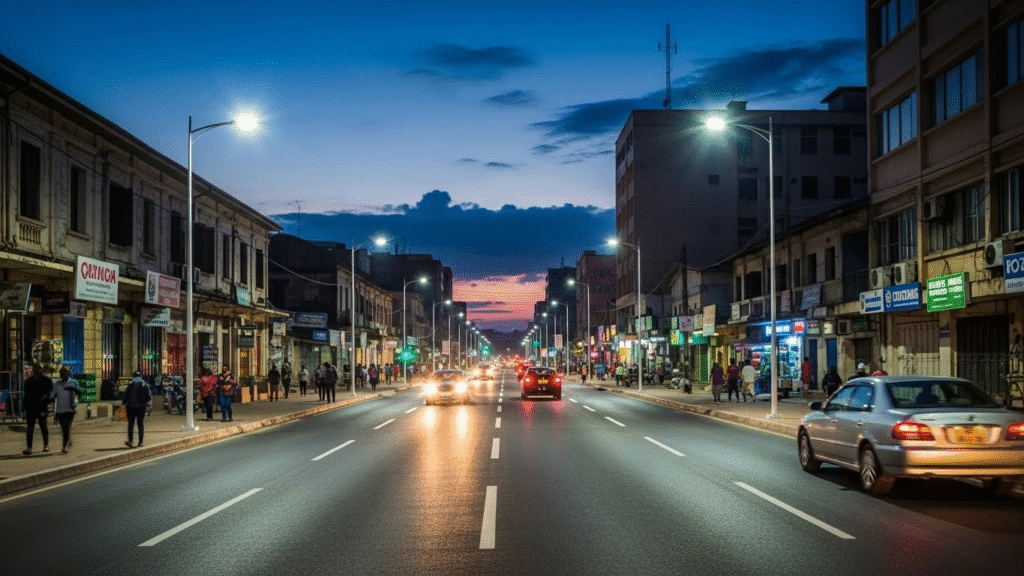
Urban zones like Yaoundé and Douala will benefit from renewed investment: road rehabilitation, public lighting, drainage, waste management, and public service upgrades. Local governments have already enacted multi-billion-franc public contracts for roadwork, lighting and municipal services. businessincameroon.com+1
These efforts aim to:
- Reduce urban congestion
- Improve sanitation and drainage (a key need in rainy seasons)
- Enhance public safety with lighting and improved mobility
- Support economically vibrant cities capable of absorbing rural-urban migration
With rapid urbanization — cities growing at ~3.6% annually — urban infrastructure planning is crucial for long-term stability and growth. World Bank+1
8. Economic Implications: Growth, Jobs, Trade & Investment
The 2026 budget’s infrastructure push doesn’t only build roads and power — it builds opportunity.
Projected Economic Effects
- Analysts forecast the construction industry to grow at an average of 6.3% annually from 2026 to 2029, fueled by public-private investments under infrastructure programs and the national development strategy. Business Wire+1
- Upgraded transport networks — including roads and ports (like deep-water ports at Kribi) — will reduce logistical costs, boost trade volumes (especially exports like timber, cocoa, minerals), and attract foreign investment. Wikipedia+1
- Expanded electricity and infrastructure access will enable new industries, support small businesses, and improve rural livelihoods.
- Employment: thousands of jobs in construction, engineering, transport, maintenance, energy — helping mitigate unemployment and underemployment.
If implemented well, the 2026 plan could break cycles of underdevelopment and open new engines of growth.
9. Challenges Ahead — Financing, Execution, Corruption & Oversight
Ambitious plans bring ambitious risks. Several challenges loom:
❗ Financing pressures
Cameroon’s public finances are already stretched. Despite increased budget allocations, the actual funding gap for full national road maintenance remains large — for example, earlier estimates showed maintenance needs of ~1.1 trillion XAF for 39,000 km, but in 2025 only ~100 billion XAF was mobilized. cameroonintelligencereport.com+1
❗ Capacity constraints
Delivering 650 km of new roads, upgrading hundreds of communal roads, expanding power infrastructure — requires skilled labor, logistics, equipment, and stable supply chains. Cameroon’s construction sector has capacity challenges. GlobeNewswire+1
❗ Risk of corruption, cost overruns, delays
Historically, infrastructure projects in many developing countries — including Cameroon — suffer from mismanagement, delays and budget overruns. Without strong transparency and oversight, public trust could erode. HILLTOPVOICES ONLINE+1
❗ Maintenance sustainability
Building new roads/roads upgrading is one thing — maintaining them is another. Past funding shortfalls suggest long-term maintenance remains uncertain. cameroonintelligencereport.com+1
❗ External economic vulnerabilities
Cameroon’s heavy reliance on imported fuel, wheat, and vehicles makes it vulnerable to global price shocks, which could strain public finances. Reuters+1
If not managed properly, the 2026 budget may deliver short-term gains — but sustainability remains uncertain.
10. What Citizens Should Expect — Immediate and Long-Term Impact
Short-term (next 1–2 years):
- Noticeable roadworks, especially major corridors and urban streets
- Construction activity, job creation
- Temporary disruption in traffic during works
- Initial improvements in mobility and access for some regions
Medium to Long-term (3–5 years):
- Better connectivity between cities and rural areas
- Reduced travel times, improved trade and commerce
- More reliable power supply in urban and rural zones
- Boost to economic sectors (agriculture, industry, commerce)
- Improved quality of life: better roads, electricity, public services
Long-term national transformation (5–10 years):
- Structural economic growth due to improved infrastructure
- Potential increase in foreign investments, trade, export capacity
- Social development: access to services, reduction of regional inequality, rural-urban integration
For ordinary Cameroonians, this roadmap could fundamentally reshape daily life, business opportunities, and national prospects.
11. Regional & International Significance — Cameroon in Central Africa
Cameroon’s strategic location — with access to the Gulf of Guinea, ports (like Kribi), and proximity to Central Africa — makes this infrastructure push regionally important. Improved roads, ports, and energy infrastructure could turn Cameroon into a regional hub for trade, logistics, and transit.
Additionally, better infrastructure may facilitate regional integration with neighboring countries, boost exports (timber, cocoa, minerals), and attract foreign direct investment (FDI).
In a continent where infrastructure often lags, Cameroon’s 2026 plan could set a model for neighboring nations seeking holistic development and economic diversification.
12. Conclusion
Cameroon’s 2026 infrastructure budget lays out a bold and ambitious vision — one that prioritizes roads, maintenance, power expansion, and urban development. The plan responds to decades of underinvestment and neglect, offering a path toward improved connectivity, economic growth, and social development.
But execution matters — funding, transparency, capacity, and maintenance will determine whether this vision becomes reality or remains another broken promise.
For Cameroon, this is more than just a budget — it’s a potential turning point. If delivered well, 2026 could mark the beginning of a new era of progress, opportunity, and national transformation.
#Cameroon #AfricaDevelopment #Infrastructure2026 #RoadConstruction #PublicWorks #EconomicGrowth #CameroonBudget #UrbanDevelopment #RuralAccess #PowerExpansion #Connectivity #DevelopmentNews
Frequently Asked Questions (FAQs)
Q1. How much of Cameroon’s 2026 public-works budget is dedicated to roads?
More than 92% of the Public Works budget is earmarked for road construction, rehabilitation, and maintenance. africasupplychainmag.com+1
Q2. How many kilometers of new roads are planned in 2026?
The plan targets nearly 650 km of newly paved roads, plus maintenance of dozens of existing corridors. businessincameroon.com+1
Q3. What about rural and communal roads?
The budget includes a 38.5% increase in funding for communal roads maintenance (16.1 billion XAF), aiming to improve the network often overlooked in past years. businessincameroon.com+1
Q4. Will this plan improve electricity access?
Yes — the 2026 budget aligns with the broader National Energy Compact, which targets universal electricity access by 2030, plus investment in hydropower projects and grid expansion. Ecofin Agency+1
Q5. How will this affect ordinary citizens?
Over time, improved roads, power, and services will mean better mobility, access to services, enhanced trade and commerce opportunities, and improved quality of life.
Q6. What are the main risks to success?
Key risks include funding shortfalls, delays, mismanagement or corruption, lack of maintenance capacity, and external economic shocks — all of which could hamper long-term success.