
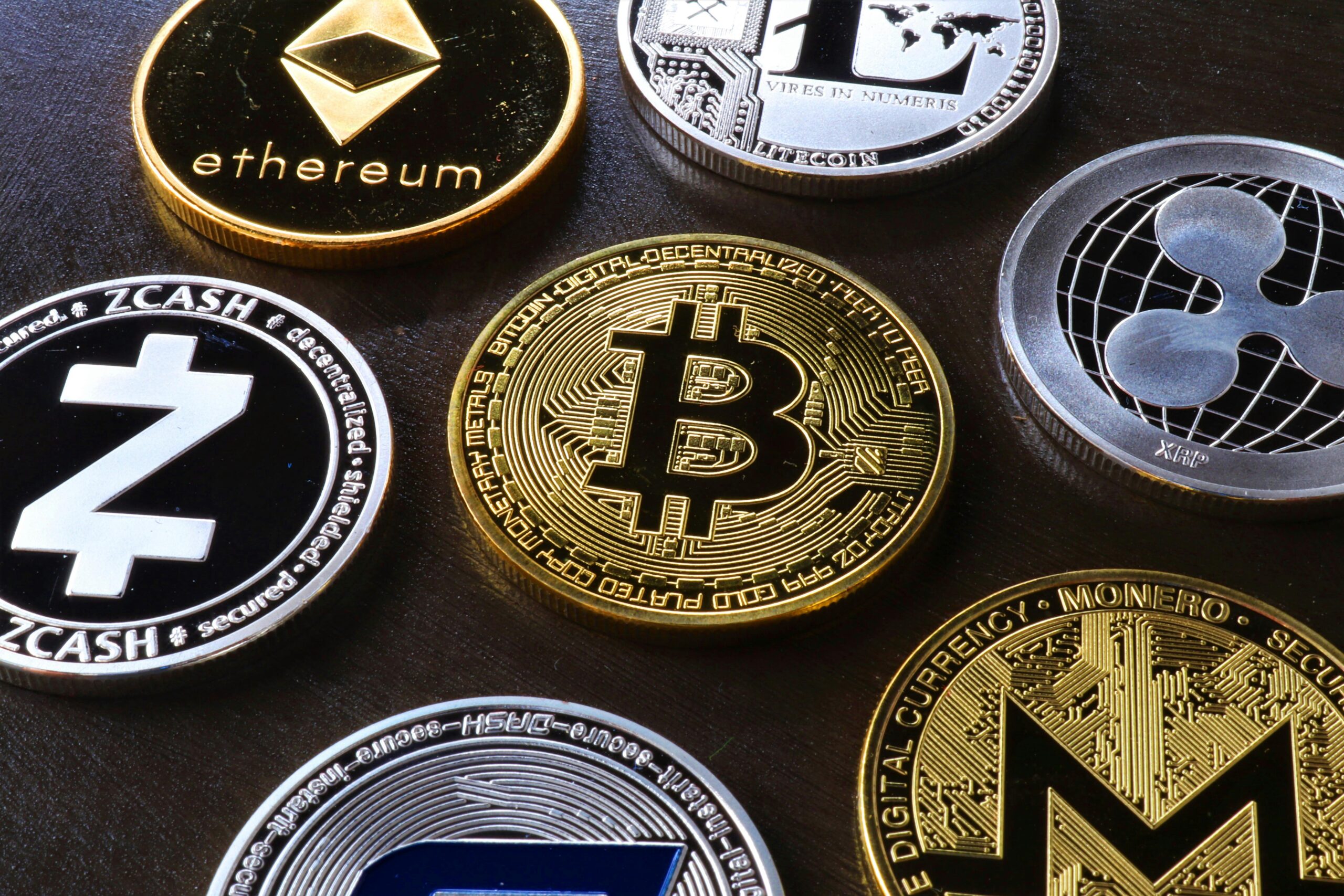
Bitcoin, Ethereum and Solana all fell sharply amid macro uncertainty, liquidations and profit-taking. Explore the latest pressure points in the crypto market and what comes next.
Bitcoin, Ethereum, Solana Drop Again: The Latest Problem Hitting Crypto
Despite high hopes for digital assets driven by institutional inflows, AI-crypto synergies, and “crypto resurgence” narratives, the market has hit another rough patch. Over recent days, Bitcoin slipped about 3 % to ~$103,845, Ethereum fell roughly 6 %, and Solana took a harder hit of 8-11 %. Binance+4Barron’s+4Cryptonews+4 The decline is not isolated to these tokens: altcoins broadly are down and the total crypto market cap has shrunk by nearly 4 % in the last 24 hours. Cryptonews+1
So what’s going on? Several overlapping factors are placing pressure on the crypto space — and understanding them is key for investors, traders and crypto-interested observers.

1. Macroeconomic Headwinds & Interest Rate Risk
One of the dominant themes: the U.S. Federal Reserve (Fed) and global central banks adopting a more cautious tone. Recent commentary pointed to “not a foregone conclusion” for imminent rate cuts, despite prior expectations. Binance+1 Higher interest rates make risk assets like cryptocurrencies less attractive in comparison to yield-bearing instruments such as bonds or high-interest savings. As borrowing costs stay elevated and economic uncertainty lingers, crypto’s “risk premium” gets squeezed.
As the market digests the possibility of protracted tighter monetary policy, momentum falters and sentiment shifts from “risk-on” to “risk-off”.
2. Derivatives Liquidations & Technical Pressure
The crypto drop isn’t just a mild wobble — it triggered large scale liquidations, especially among leveraged long positions. On November 4, over $1+ billion of leveraged trades were wiped out as Bitcoin, Ethereum and Solana fell 5-10 %. CoinDesk+1 Most of these liquidations were long traders (nearly 90 %), highlighting how crowded bullish bets had become.
When price drops accelerate and hit key levels, forced liquidations amplify the move, turning what might have been a minor pullback into a sharper correction. Technical traders point to Bitcoin’s failure to hold support near $100k as a worrying sign; if that level breaks, more downside could follow. Barron’s

3. Profit-Taking & Built-in Optimism
Crypto markets had already enjoyed a strong run, particularly in late 2024 and early 2025. As major holders and early buyers lock in profits, the risk of a self-fulfilling correction increases. Solana, for example, surged ahead of its U.S. spot ETF launch, then dropped nearly 20 % in a week from ~$205 to ~$165 even as its ETF products saw strong inflows. The Economic Times+1
This divergence — institutional flows + token price weakness — highlights that even good fundamentals may not overcome sentiment shifts or systemic risk in the short term.
4. Regulatory & Systemic Risk Backdrop
While there hasn’t been a single fresh regulatory shock this week, the broader landscape remains uneasy. With previous exchange hacks, DeFi exploits and jurisdictional uncertainty still fresh in memory, any macro or sector-specific weakness tends to amplify the risk premium on crypto assets.
For example, a recent hack on a DeFi protocol built on Ethereum added fuel to concerns about smart contract risk. Barron’s Additionally, regulatory ambiguity around crypto ETFs, stablecoins, and institutional holding structures means the market may price in “unknowns” more readily than expected.

5. Divergence in Flows: Solana vs Others
Interestingly, not all flows are heading out. According to data, U.S. spot Solana ETFs recorded $70 m in inflows recently — extending a consecutive days streak — even as Bitcoin and Ethereum ETFs registered large outflows ($187 m from Bitcoin; $136 m from Ethereum). Coinpaper+1 This suggests that some institutional investors are favouring alternative layer-1 tokens, despite the broad market correction.
However, strong ETF flows have not immediately translated into token price strength — likely because they are overshadowed by the broader risk-off environment and large open-interest liquidations.
6. What It Means for Investors & Traders
For long-term believers, this dip may present a potential buying opportunity — especially if they believe in the structural pivot to Web3, layer-1 ecosystems, institutional adoption, and crypto’s digital-asset thesis. However, timing remains difficult: high volatility and uncertain macro conditions mean one should be prepared for further downside.
For traders and near-term participants, risk management becomes critical. With major long positions already liquidated and market sentiment fragile (Fear & Greed Index dropped to ~27), even a small trigger could ignite another leg lower. Cryptonews
For institutions, the divergence in flows suggests selective interest — some are reducing exposure in Bitcoin/Ethereum, while others are positioning in tokens like Solana. That could signal a thematic shift, but it doesn’t guarantee broader upside in the short term.

7. Where Could Things Go From Here? Key Support & Resistance
- Bitcoin: Support zones near the $100k mark are crucial. If that breaks, technical analysts estimate further down-side risk to the $90k-$80k range. Finance Magnates+1
- Ethereum: With headwinds on smart contract risk, competition from other chains, and DeFi governance uncertainty, ETH faces mid-term challenges. Its support circa $3,400-$3,500 is key, while resistance lies near $4,000+.
- Solana: The token’s recent drop below ~$160 puts it in a retracement zone. Analysts point to the $150-$156 level as a possible anchor. If that fails, downside risk towards $130-$140 emerges. The Economic Times
The broader crypto market cap — currently ~$3.5 trillion to $3.6 trillion — will be a gauge of overall health. A sustained slide below $3 trillion could trigger the next wave of risk-off rotation.
8. Lessons & Takeaways for the Wider Crypto Market
- Valuation matters: The fact that crypto valuations were high doesn’t shield them from corrections. Once expectations are built in, little room remains for disappointment.
- Leverage amplifies risk: Market-wide liquidations show how fast the unwind can happen when price triggers hit.
- Flows + sentiment ≠ immediate upside: Strong ETF inflows don’t guarantee price strength if underlying sentiment is weak.
- Macro risk is real: Crypto is not isolated from interest-rate, inflation, and macroeconomic cycles — just more volatile.
- Selective narratives matter: While Bitcoin and Ethereum dominate headlines, other tokens may carve out niches and see differentiated behaviour (Solana’s example).
Final Thoughts
The recent drop in Bitcoin, Ethereum and Solana is far from a surprise in isolation — given the macro backdrop, technical pressure and liquidity risk. What stands out is how fast the sentiment shifted and how quickly the derivatives unwind materialised.
For crypto watchers, the message is clear: we’re not back in full-on bull mode yet. The large moves earlier this year may have had a “peak optimism” feel and this pull-back could reflect a reassessment phase.
If the macro environment stabilises, institutions re-entering at lower levels could set the stage for the next move up. But until then, downside risk remains elevated, especially for long-only leveraged players.
Whether this marks a healthy consolidation or the beginning of a deeper correction depends heavily on broader financial-market conditions, regulatory clarity and reinvestment backing.
As one analyst put it, “the market sits in a fragile equilibrium — time becomes a growing headwind for bulls unless price recovers decisively.”
#Bitcoin #Ethereum #Solana #CryptoCrash #CryptoNews #CryptocurrencyMarket #CryptoCorrection #DigitalAssets #CryptoInvesting #Blockchain
Frequently Asked Questions (FAQs)
1. Why did Bitcoin, Ethereum, and Solana drop again recently?
The recent decline in major cryptocurrencies is primarily due to increased regulatory scrutiny, profit-taking by institutional investors, and a stronger U.S. dollar. Additionally, uncertainty around global economic conditions and rising bond yields have weakened investor confidence in risk assets, including crypto.
2. What external factors are currently affecting the crypto market?
Macroeconomic pressures such as inflation data, central bank interest rate decisions, and tightening monetary policies are major factors. Concerns about global liquidity and the slowdown in tech investment also play a crucial role in the latest crypto sell-off.
3. Is this crypto dip temporary or part of a longer trend?
While short-term volatility is common in the crypto market, experts suggest this correction might be part of a longer consolidation phase. Market recovery often depends on policy clarity, technological upgrades, and renewed investor interest in blockchain applications.
4. How are institutional investors reacting to the recent decline?
Institutional players are cautiously rebalancing portfolios, with some shifting toward AI and energy sectors. Others are waiting for Bitcoin ETF approvals or better entry points before re-entering the market. Despite the dip, long-term sentiment remains cautiously optimistic.
5. How has this drop impacted DeFi and NFT projects?
Decentralized finance (DeFi) and non-fungible token (NFT) markets have also seen reduced trading volumes and lower liquidity. Projects relying on Ethereum and Solana networks are facing short-term slowdowns, but innovation in decentralized apps and tokenization continues steadily.
6. What role does U.S. regulation play in current market conditions?
U.S. regulatory bodies, especially the SEC, have intensified actions against unregistered exchanges and crypto products. This has created uncertainty among traders and institutions, impacting trading volumes and token valuations.
7. How are Bitcoin, Ethereum, and Solana expected to perform in the coming months?
Analysts predict continued volatility through year-end. Bitcoin could stabilize around key support levels, while Ethereum’s upgrades and Solana’s expanding ecosystem may drive partial recovery in 2026, depending on macroeconomic conditions.
8. Should investors sell or hold their crypto assets now?
Financial experts recommend avoiding panic selling. Investors are advised to hold diversified portfolios, focus on long-term potential, and monitor fundamental developments rather than short-term market movements.
9. Are there any positive signs amid the downturn?
Yes. Despite the drop, blockchain adoption, institutional partnerships, and advancements in AI integration with crypto systems signal long-term growth. Moreover, reduced hype could pave the way for healthier, more sustainable market expansion.
10. What lessons can traders learn from this market correction?
The current downturn highlights the importance of risk management, portfolio diversification, and avoiding over-leverage. Investors should base decisions on credible data and project fundamentals, not short-term speculation or social media trends.