
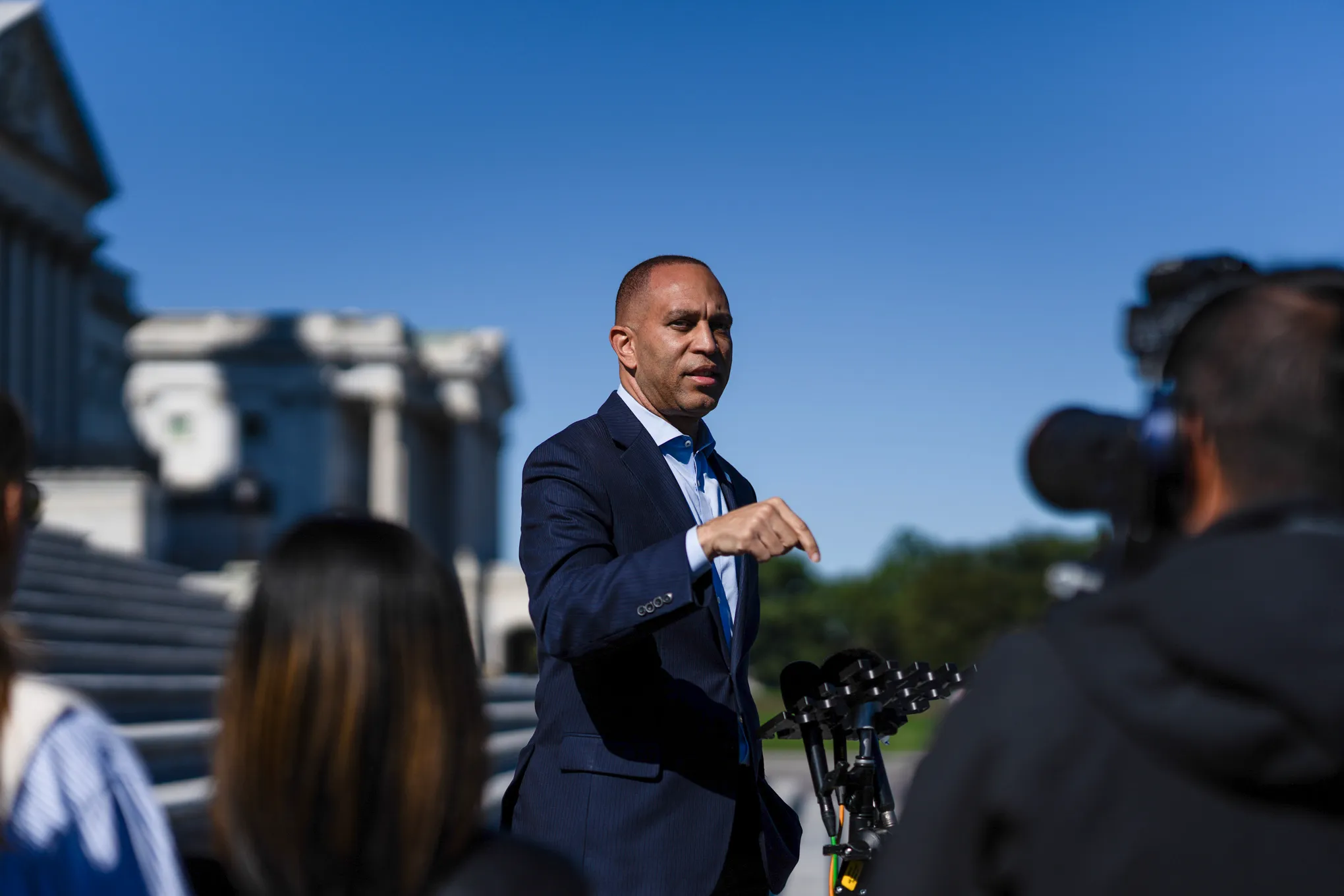
Pardoned Capitol Rioter Arrested Again for Allegedly Threatening to Kill House Leader Hakeem Jeffries
Christopher Moynihan, a pardoned Capitol rioter, was arrested for allegedly threatening to kill Democratic House Minority Leader Hakeem Jeffries. FBI and state authorities are investigating the motive and mental health concerns.
Former Capitol Rioter Arrested in New York for Alleged Death Threat Against Hakeem Jeffries
A New York man previously convicted for his involvement in the January 6, 2021, Capitol riot has been arrested again — this time for allegedly threatening to assassinate Democratic House Minority Leader Hakeem Jeffries.
According to New York State Police, Christopher Moynihan, who had earlier been pardoned by former President Donald Trump, was apprehended on Sunday after the FBI received a tip from an anonymous source. The source claimed that Moynihan had declared his intention to kill Jeffries “in a few days” in New York City, citing it was “for the future.”
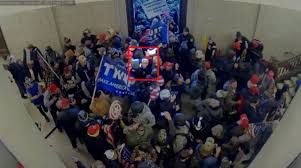
Background: From Capitol Convict to Presidential Pardon
Moynihan, who was previously convicted of several charges linked to the January 6 insurrection — including obstruction of an official proceeding and disorderly conduct in a restricted area — had served nearly two years in prison before being granted a presidential pardon earlier this year.
The pardon was part of a broad clemency initiative issued by Trump for numerous January 6 participants. The decision sparked controversy, with critics arguing it sent a dangerous message about accountability and political violence.

Threat Details and Ongoing Investigation
Court filings reveal that Moynihan allegedly sent multiple text messages last Friday, explicitly threatening Jeffries’ life. One message reportedly stated, “Hakeem Jeffries makes a speech in a few days in NYC. I cannot allow this terrorist to live.” Another text read, “Even if I am hated, he must be eliminated.”
Authorities say these communications triggered immediate intervention from federal and state law enforcement. The FBI and New York State Police coordinated swiftly to detain Moynihan before any attempt could be made.
Prosecutors also allege that Moynihan had exhibited signs of recent drug abuse and “increasing homicidal ideations,” as per reports from the anonymous informant.
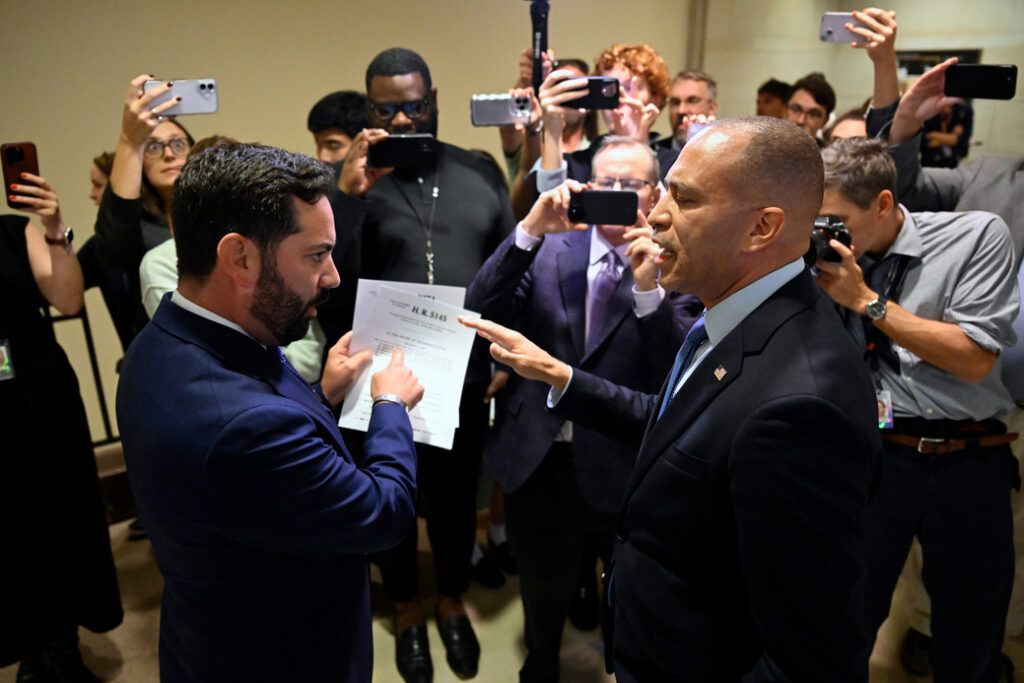
Response from Hakeem Jeffries
In a public statement, Rep. Hakeem Jeffries expressed gratitude toward law enforcement agencies for their rapid response and vigilance.
“Threats of violence will not stop us from showing up, standing up, and speaking up for the American people,” Jeffries said.
He also criticized Trump’s “blanket pardon” policy, stating that such leniency “undermines justice and emboldens extremist behavior.”
Legal Proceedings and Detention Status
Moynihan appeared before a New York judge on Tuesday, where it was ruled that he will remain in custody pending a Thursday hearing to determine whether he can be released before trial. He currently faces a terroristic threat charge, a serious felony under New York law.
At present, no attorney has been listed for Moynihan, and family members have not provided public comments.
The court has emphasized the gravity of the allegations, particularly given Moynihan’s criminal history and mental health concerns. The D.C. judge who previously sentenced him for the Capitol riot had recommended both mental health and drug rehabilitation treatment, citing his struggle with opioid addiction.
History of Radicalization and Online Extremism
Court documents from his earlier case depict Moynihan as an individual who became increasingly politically radicalized during the Trump presidency, spending much of his time consuming online political content.
His prior behavior during the Capitol riot included entering the Senate chamber and taking photos of sensitive documents — though he was not accused of assaulting officers or committing acts of physical violence.
Experts note that Moynihan’s case underscores a growing concern about online radicalization and post-pardon recidivism among individuals involved in extremist movements.
Political and Security Repercussions
Law enforcement officials remain on high alert amid a rise in threats against public officials following recent violent incidents, including the assassination of right-wing commentator Charlie Kirk during a university event earlier this year.
Analysts warn that this pattern of politically motivated threats highlights an urgent need for enhanced domestic intelligence measures and rehabilitation programs for radicalized individuals.
#HakeemJeffries #CapitolRiot #BreakingNews #FBIInvestigation #PoliticalViolence #USPolitics #TrumpPardon #DomesticSecurity #NYCNews #Justice
Frequently Asked Questions (FAQs):
Q1: Who is Christopher Moynihan?
Christopher Moynihan is a New York resident previously convicted for participating in the January 6 Capitol riot. He was later pardoned by former President Donald Trump.
Q2: What charges does Moynihan currently face?
He faces a felony charge of making a terroristic threat after allegedly threatening to kill House Minority Leader Hakeem Jeffries.
Q3: What was Moynihan’s role in the January 6 attack?
Moynihan entered the Senate chamber, took photos of documents, and was convicted for obstructing an official proceeding and disorderly conduct.
Q4: What was Hakeem Jeffries’ response to the threat?
Jeffries thanked law enforcement for their swift action and reaffirmed that intimidation would not deter his commitment to public service.
Q5: Why is this case significant?
It raises concerns about ongoing extremist threats and the consequences of political pardons, especially when linked to individuals with histories of radical behavior.