
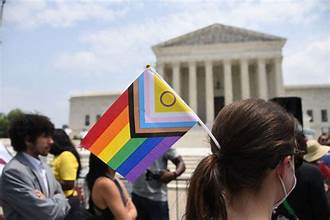
With the Supreme Court set to consider a new case challenging the 2015 ruling legalizing same-sex marriage, we explore the legal history, current threats, public opinion, and what the future holds for marriage equality in America.
The State of Marriage Equality in the U.S.: 2025 Edition
In 2015, the landmark case Obergefell v. Hodges secured the constitutional right to same-sex marriage nationwide, declaring that the Fourteenth Amendment’s Due Process and Equal Protection Clauses guarantee this fundamental liberty. NBC Chicago+2PinkNews+2 Since then, the number of married same-sex couples has more than doubled: as of mid-2025, an estimated 823,000 same-sex married couples live in the U.S. Williams Institute
Yet, a decade later, the security of that right is facing renewed scrutiny. Several state-level efforts and a pending petition before the Supreme Court have cast the future of marriage equality into uncertainty.

Why the Re-Examination Now?
Shifting Court Composition & Signalling
Several justices who dissented in Obergefell remain on the bench, and conservative jurisprudence has shown a willingness to revisit “settled” precedents. The Pony Express+1 Although marriage equality is widely supported among Americans (68–70% approval in recent polling) Wikipedia+1 its constitutional status may be more vulnerable than previously assumed.
The Case That’s Prompting Review
Former Kentucky clerk Kim Davis, who refused to issue marriage licenses to same-sex couples in 2015, filed a petition for certiorari asking the Supreme Court to hear her case — including a request to revisit Obergefell. PinkNews+1 The Court is scheduled to consider whether to take up the case at its conference on November 7, 2025. OUTtv
State-Level Pressures
Parallel to the court’s docket, multiple states have introduced non-binding resolutions urging the Court to overturn Obergefell. For example, five states – including Idaho and Montana – have considered such measures. Them+1 Major organizations like the Southern Baptist Convention (SBC) recently adopted a resolution calling for the reversal of Obergefell. The Guardian+1

What Happens if the Supreme Court Takes Up the Case?
If the Supreme Court grants review, the case would likely be argued in 2026 with a final decision by mid-2026 or later. The pivotal question: Will the Court reaffirm, limit or overturn Obergefell?
- Reaffirmation would preserve marriage equality firmly under federal constitutional protection.
- Limitation could narrow the scope (e.g., fewer protections for non-married couples or a weaker constitutional underpinning).
- Overturning would send the issue back to states, potentially enabling some states to restrict or outlaw same-sex marriage (though the 2022 Respect for Marriage Act ensures federally recognized marriages must be respected across states). Wikipedia+1
Even if Obergefell is overturned, the Respect for Marriage Act (RFMA) remains in force — requiring federal recognition of same-sex and interracial marriages validly entered in other jurisdictions. But RFMA does not guarantee the right to marry; rather, it mandates recognition. PinkNews
Public Opinion & Social Context
Support for same-sex marriage remains strong among Americans: 68% to 70% in recent polls favour legalization. Wikipedia Younger generations show even higher support, and same-sex couples now more than twice as many are married compared to 2015. Williams Institute
Still, opposition remains vocal — especially from religious and conservative groups. The SBC’s recent resolution underscores this. AP News Meanwhile, states like Texas have modified judicial codes to allow judges refusing to officiate same-sex marriages on religious grounds. Chronicle
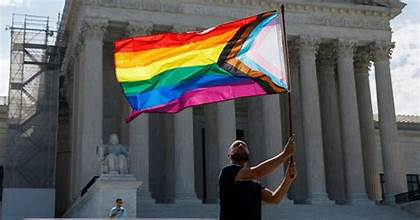
Key Legal & Political Flashpoints
1. Constitutional Question
Obergefell relied on both Due Process and Equal Protection clauses. Many conservatives argue the decision was “egregiously wrong” and want a narrower basis for marriage rights. PinkNews
2. Respect for Marriage Act
While the act protects marriages already entered, it doesn’t prevent a state from denying the ability to marry — meaning legislative or judicial changes at the state level could still impact new marriages.
3. State-By-State Variance
If federal protections weaken, the right to marry may again depend on state constitutions and laws — reintroducing a “marriage atlas” scenario.
4. Intersection with Religious Freedom
Many legal challenges mix marriage equality with religious-liberty claims — for example, asserting governmental duty to compel recognition of clergy or clerk refusal rights. The Kim Davis case is emblematic of this trend.
Where the Fight Is Heading
Potential Outcomes
- If Supreme Court declines review (no cert.): Obergefell remains settled precedent; status quo holds.
- If Court takes review but upholds Obergefell: Strong reaffirmation of marriage equality; future challenges harder.
- If Court narrows Obergefell: Marriage equality remains, but protections may shrink or be subject to state regulation.
- If Court overturns Obergefell: Federal right vanishes; states regain control, but RFMA limits interstate non-recognition.
Risks and Signals
- A high-profile reversal would create legal chaos: divorce rates, parental rights, spousal benefits, inheritance and immigration could all be affected.
- Corporate and pension systems may face enormous administrative implications.
- Conversely, reaffirmation could increase legislative pressure to expand LGBTQ+ protections (housing, employment, healthcare).
Implications for Same-Sex Couples & Families
For couples married already: Their marriages are currently protected federally (via RFMA) and via Obergefell. A reversal would still leave existing marriages recognised across state lines.
For couples seeking to marry: The right remains for now — but the future may become uncertain depending on the Court’s decision or state actions.
For families with children: Legal clarity is critical for parental rights, adoption, insurance. Any change could introduce new legal burdens or risks.
For LGBTQ+ rights broadly: Marriage equality remains one pillar; other areas- such as anti-discrimination protections- may feel a ripple effect from shifts in jurisprudence.
Expert Analysis
Legal scholars emphasise the unique nature of this moment. One prominent verdict: “While Obergefell is more entrenched than Roe was at the time of its reversal, the confluence of ideological shifts on the Court, aggressive state-level action and religious-liberty litigation means it cannot be taken for granted.” TIME+1
Analyst insight: A reaffirmation would signal stability and potentially embolden protections; in contrast, even a narrowing decision would create a mosaic of state-level rights and require major adaptation by couples, families and institutions.
What to Watch Next
- November 7, 2025: Supreme Court conference; whether the court votes to hear the Kim Davis case. PinkNews+1
- State legislative sessions: Resolutions urging SCOTUS to reconsider Obergefell, especially in conservative states. Them
- Corporate and institutional responses: How employers, insurers and businesses react to potential shifts in marriage law.
- Public opinion evolution: Ongoing polling will reflect how society adapts to possible legal changes.
Key Takeaways
- Same-sex marriage in the U.S. is currently protected under Obergefell and the Respect for Marriage Act—but its future is under renewed challenge.
- The Supreme Court may decide soon whether to hear a case that explicitly asks it to revisit Obergefell (Nov. 7 conference).
- State-level resolutions and religious-liberty policies are contributing to mounting pressure, though public support remains strong (~70%).
- If Obergefell is overturned or limited, the right to marry could revert largely to state law, with federal recognition still intact via RFMA.
- For couples, families and institutions, the upcoming months are critical: while nothing has changed yet, preparing for possible shifts is wise.
#MarriageEquality #SameSexMarriage #Obergefell #SupremeCourt #LGBTQRights #RespectForMarriageAct #GayMarriageUS #EqualityForAll #SCOTUS2025 #LoveIsLove
Frequently Asked Questions (FAQs)
1. Will same-sex marriage still be legal in the U.S.?
As of now yes — but if the Supreme Court chooses to review and overturn the Obergefell decision, the ability to marry could become subject to state regulation rather than guaranteed nationwide.
2. What happens if Obergefell is overturned?
Existing marriages would still be recognised federally under the Respect for Marriage Act; however new marriages might depend on state law, varying widely across jurisdictions.
3. What is the Respect for Marriage Act (RFMA)?
A 2022 federal law that mandates states recognise valid same-sex and interracial marriages performed elsewhere in the U.S. It does not guarantee the right to marry but ensures recognition of existing marriages. Wikipedia
4. Why is the Supreme Court considering a review now?
A petition from Kim Davis is challenging previous rulings and arguing that Victorian due-process reasoning behind Obergefell was flawed; the Court will decide on Nov. 7 whether to grant review. GAY TIMES+1
5. How do Americans feel about same-sex marriage today?
Support is strong — around 68–70% of Americans favour legalisation, including about three-quarters of independents. Wikipedia
6. Can states make rules allowing judges to refuse officiating same-sex weddings?
Yes — for example, Texas recently updated its judicial code to allow judges to decline officiating same-sex marriages on religious grounds. Chronicle