
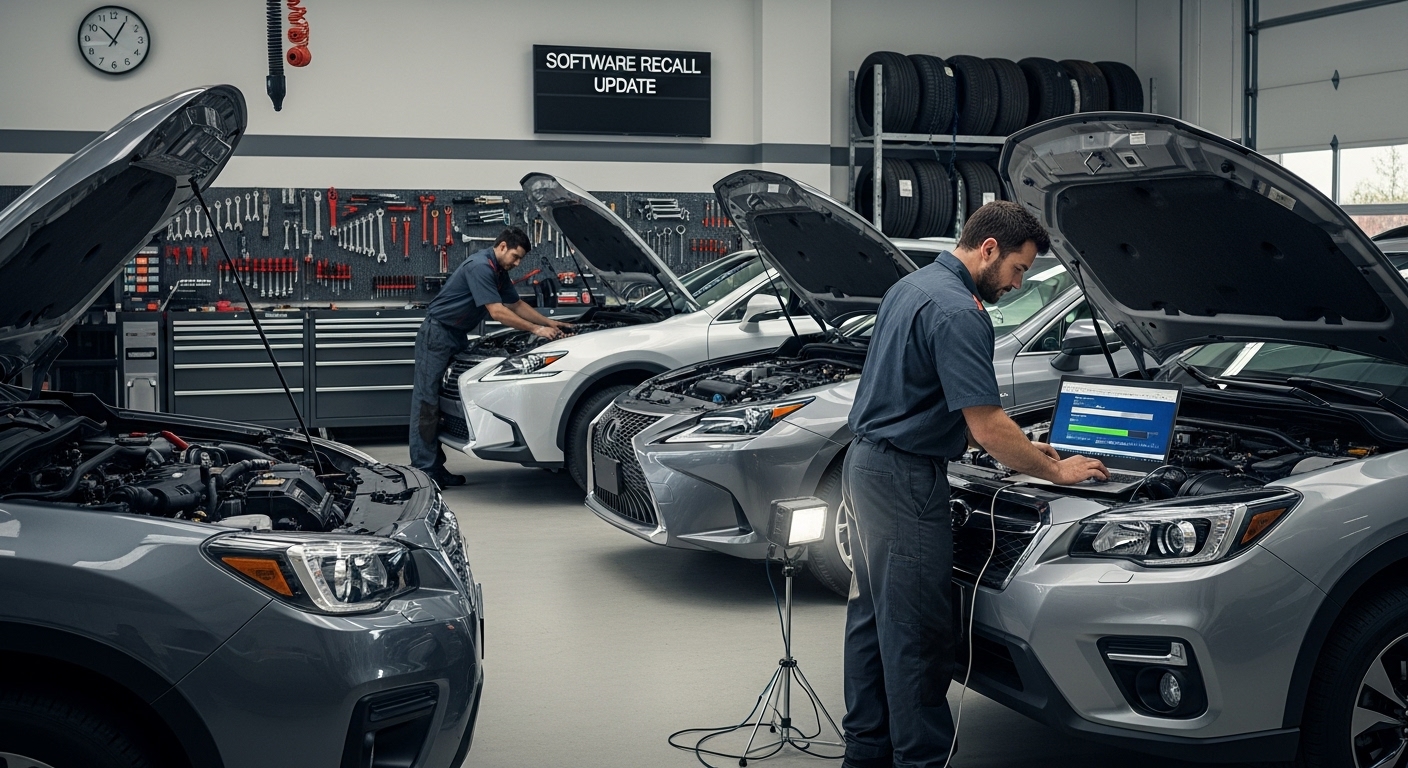
Toyota, Lexus and Subaru are recalling more than one million U.S. vehicles due to a rear-view camera software flaw. Learn which models are affected, why the recall was triggered and how the free fix works.
The Recall Shock: What’s Going On?
On November 5 2025, the U.S. National Highway Traffic Safety Administration (NHTSA) announced that Toyota Motor North America will recall 1,024,407 vehicles across its Toyota, Lexus and Subaru brands in the U.S. due to a software defect in rear-view camera systems. Reuters+2MotorTrend+2
The defect arises in vehicles fitted with a Panoramic View Monitor parking-assist camera system: under certain conditions, when the vehicle is shifted into reverse, the camera feed may freeze or go blank — undermining driver rear visibility and violating federal safety standard FMVSS 111 (“Rear Visibility”). MotorTrend+1 As a result, dealers will deliver a free software update to rectify the problem. CBS News+1
Which Models Are Affected?
The recall spans a wide swath of models and years:
- Toyota & Lexus: Model years 2022-2026 for select Camry, Crown, Grand Highlander, Highlander, Prius, NX, RX, LS, LX, and others. MotorTrend+1

- Subaru: The 2023-2025 model-year Subaru Solterra — the electric vehicle developed with Toyota — equipped with the same panoramic system. MotorTrend+1
Owners are urged to check their VIN via the manufacturer’s website or NHTSA recall lookup to confirm eligibility.
Why the Recall? Breakdown of the Issue
The root cause is a software interaction fault within the parking-assist system. According to MotorTrend: when the vehicle’s ignition is turned on, if the parking assist computer is writing data and the panoramic view monitor system is performing its own optical alignment write, the monitor may freeze or blank if the vehicle is shifted into reverse within approximately 12.5 seconds. MotorTrend
In this state, the camera fails to display an image, meaning the driver is deprived of the view behind the vehicle — which is critical when reversing out of driveways, parking lots or in congested areas. NHTSA concluded this defect means the vehicles do not comply with FMVSS 111 requirements. The Independent+1
Although Toyota emphasizes that “normal mirror and sensor functionality” remain intact, the camera assist’s malfunction still poses a crash risk — especially in low-visibility situations.

What’s the Remedy and Owner Timeline?
Toyota and its luxury and co-brands have outlined a clear plan for owners:
- Free software update: Dealers will update the parking assist/monitor system free of charge. No parts replacement (in most cases) appears necessary since the fix is firmware-based. MotorTrend+1
- Owner notifications: Letters to affected owners are expected to begin mailing in mid-December 2025. MotorTrend+1
- Check VIN: Owners should verify their vehicle’s recall status via NHTSA or manufacturer sites using their VIN.
- Interim caution: Until the update is completed, owners are advised to use extra care when reversing, rely on side mirrors, and avoid relying solely on the camera feed.
Dealers will be prepared for this large-scale software campaign; because only a re-programming is needed, downtime per vehicle should be limited.

Implications: Brand, Industry & Safety
For Toyota, Lexus & Subaru:
- This recall is significant in scale — over one million vehicles — and affects a key safety-assist feature, which may challenge brand perceptions of reliability.
- On the upside, because the fix is software-based, the cost per vehicle is low compared to mechanical recalls, and the execution should be manageable.
- The recall underscores automaker exposure to software/firmware defects as vehicles become increasingly connected and driver-assist reliant.
For the Industry:
- This continues a broader theme: manufacturers around the world are grappling with software-induced recalls. Rear-view camera and infotainment software issues have surged. mint+1
- Regulators such as NHTSA are reinforcing that complex software systems must meet the same safety standards as physical hardware — challenging automakers to bolster pre-release system testing and validation.
For Owners and Safety:
- If you own an affected model, you should make the dealer appointment sooner rather than later — delays could affect resale value and warranty implications.
- The recall reinforces that even routine driver-assist systems matter — a blank screen when reversing can have serious consequences for pedestrian safety.
What to Watch Next
- Repair completion rate: How quickly the recall is executed will impact owner confidence and brand sentiment.
- Warranty and resale implications: Owners may face questions in resale markets unless the recall is documented and completed.
- Software-driven defect tracking: Will Toyota strengthen its firmware validation processes? Will NHTSA increase scrutiny of software-based safety systems?
- Cost and recalls trend: Although not mechanical, the magnitude means Toyota may face elevated recall provisions for this fiscal year.
Key Takeaway
The Toyota-Lexus-Subaru recall of more than one million vehicles is driven by a software flaw in rear-view camera systems — a timely reminder that as vehicles become more digital, automakers must match hardware quality assurance with software assurance. For owners, the fix is free and relatively straightforward. But the recall’s scale signals deeper shifts in automotive safety and industry risk.
Frequently Asked Questions (FAQs)
Q1: How many vehicles are being recalled?
About 1,024,407 vehicles in the U.S. under Toyota, Lexus and Subaru brands are being recalled. Reuters
Q2: Which years and models are affected?
The recall covers specific Toyota and Lexus models from 2022-2026 model years and the Subaru Solterra from 2023-2025. MotorTrend
Q3: What’s wrong with the vehicles?
A software malfunction can cause the rear-view panoramic camera feed to freeze or go blank when the vehicle is shifted into reverse, reducing rear visibility. Consumer Reports
Q4: Are drivers in immediate danger?
While the car remains operable, the rear camera’s failure can increase crash risk when reversing — particularly in low-visibility or pedestrian-dense situations.
Q5: How will Toyota fix the issue?
Dealers will install a free software update to the affected parking assist/monitor system. Owners need no parts replacement in most cases. MotorTrend
Q6: When will notifications go out?
Owner notification letters are expected starting mid-December 2025. Owners should check their VIN now. mint
Q7: Will this affect the vehicle’s warranty or resale?
Completing the recall repair ensures compliance. Unrepaired status could influence resale value or insurance premium discussions — owners should obtain documented proof of repair.
Q8: Is this the only recent recall issue for Toyota?
No. Earlier in October, Toyota recalled nearly 394,000 vehicles (Tundra/Sequoia) over another rear-view camera issue. New York Post
Q9: How does this affect drivers emotionally?
For many, cameras and sensors are now integral to daily driving. A failure in what is considered a “minor” assist system can erode trust — prompting concerns about “software reliability” beyond traditional mechanical issues.
Q10: What should owners do now?
Check your VIN on the manufacturer or NHTSA website, set a dealer appointment for the software update, and in the meantime, rely on multi-mirror checks when reversing.