
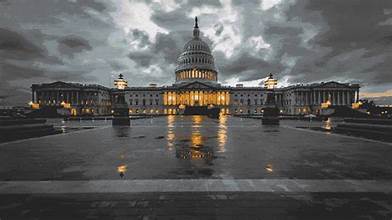
Explore what triggers a U.S. government shutdown, how it affects citizens and the economy, and what lessons can prevent future crises.
U.S. Government Shutdown: Causes, Consequences, and the Path Forward
A government shutdown is one of the most visible signs of political gridlock in Washington. When federal lawmakers fail to pass funding bills on time, large parts of the government are forced to close temporarily, disrupting services, delaying paychecks, and creating uncertainty for millions of Americans.
As recent debates and deadlines have shown, shutdowns are not only political showdowns but also deeply affect the economy, national operations, and public trust in leadership.

What Is a Government Shutdown?
A government shutdown occurs when Congress fails to pass legislation to fund federal agencies and programs. Without an approved budget or a continuing resolution (CR) to extend funding temporarily, nonessential federal operations are suspended.
Essential services such as air traffic control, national security, and emergency medical care continue, but employees in those areas often work without immediate pay until the impasse is resolved.
Historically, shutdowns have varied in length — from a few days to over a month — depending on how quickly lawmakers can reach a compromise.

Why Do Shutdowns Happen?
Shutdowns typically arise from budget disagreements between the executive branch and Congress, or between the two chambers themselves. These disputes often revolve around issues like:
- Government spending levels and national debt
- Social program funding (healthcare, housing, or education)
- Tax policies and economic priorities
- Foreign aid or defense allocations
When neither side compromises before a fiscal deadline, agencies run out of authorized funding and must halt nonessential activities until a new agreement is signed.
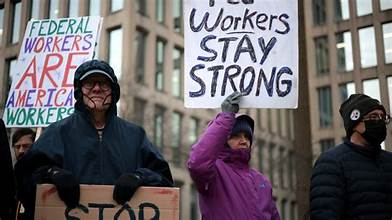
How It Impacts Federal Workers and Citizens
The most immediate effect of a shutdown is felt by federal employees. Hundreds of thousands of government workers may be furloughed, meaning they are temporarily laid off without pay. Others, considered “essential,” must continue to work without pay until funding resumes.
The consequences extend beyond Washington:
- Families and individuals experience delays in federal benefits or services, such as housing assistance, loan approvals, or food programs.
- Small businesses that rely on government contracts face postponed payments or suspended projects.
- Tourism takes a hit when national parks and museums close, affecting nearby restaurants, hotels, and transportation providers.
- Air travel can be disrupted if Transportation Security Administration (TSA) or air traffic control staff are short-handed.
While federal employees typically receive back pay once the shutdown ends, contractors and temporary workers often do not — causing lasting financial strain.
Economic Consequences
A prolonged government shutdown can have real economic costs. Analysts estimate that every week of federal inactivity trims billions from national productivity. Delays in spending ripple through the private sector, reducing consumer confidence and slowing business investment.
Economists highlight that government shutdowns can:
- Reduce GDP growth for the quarter in which they occur.
- Delay critical infrastructure and technology projects.
- Interrupt scientific research, environmental monitoring, and innovation programs.
- Weaken international confidence in U.S. economic stability.
Although the economy often recovers quickly after funding is restored, the indirect effects — such as reduced morale and planning uncertainty — can linger for months.

Broader Social and Global Implications
Shutdowns also send signals beyond domestic borders. As a global leader in finance and trade, the United States plays a central role in world markets. Extended shutdowns raise questions about political reliability, impacting investor sentiment and currency stability.
Domestically, the shutdown deepens public frustration. Everyday citizens see delayed services and halted progress on policies that matter most — from veterans’ care to environmental protection. Over time, frequent shutdowns can erode trust in democratic institutions and the effectiveness of governance.
How Shutdowns Are Resolved
Ending a shutdown typically requires one of two paths:
- Passing a continuing resolution — a short-term deal that reopens the government temporarily while negotiations continue.
- Approving a full-year budget — a longer-term solution that sets spending for all federal departments.
Both options demand cooperation between political parties. In most cases, compromises are reached under pressure from mounting public dissatisfaction and economic urgency.
Lessons from the Past
The United States has experienced more than 20 government shutdowns since the modern budgeting process began in 1976. Some lasted only hours; others stretched over a month.
Each one highlights recurring lessons:
- Planning ahead reduces disruptions.
- Nonpartisan dialogue builds faster consensus.
- Automatic funding mechanisms could prevent shutdowns altogether.
Lawmakers have periodically proposed legislation to create automatic continuing resolutions that keep the government running at prior-year funding levels until a new budget passes. This approach aims to prevent federal workers and citizens from becoming collateral damage during political disputes.
The Human Side of a Shutdown
Beyond statistics and politics lies the human cost. Federal employees often share stories of missing paychecks, delayed rent, or postponed medical care. Families dependent on public programs experience uncertainty about how long they can endure gaps in support.
Communities respond with resilience — charities, food banks, and local organizations step up to assist those affected. Still, the emotional toll of instability can’t be overlooked. For many, a shutdown symbolizes more than a budget crisis; it represents a breakdown in unity and shared purpose.
Moving Toward Stability
Experts agree that long-term stability will depend on restoring trust and accountability. The budgeting process is complex but not unsolvable — and repeated shutdowns highlight the need for bipartisan cooperation and institutional reform.
Potential strategies include:
- Early negotiation frameworks to align priorities before deadlines.
- Transparent spending reviews to ensure accountability.
- Public education about how shutdowns occur and how citizens are affected.
At its core, preventing future shutdowns means strengthening collaboration rather than competition in the political arena.
Expert Analysis: A Deeper Look at the U.S. Government Shutdown
From an expert perspective, the recurring pattern of U.S. government shutdowns exposes structural weaknesses in the federal budgeting process and the growing polarization within political decision-making.
1. Systemic Policy Gridlock
Economists and policy analysts argue that shutdowns are not simply budgetary accidents — they are the result of a structural flaw in how fiscal deadlines are handled. The U.S. operates under a complex appropriations system that requires annual passage of 12 separate spending bills. When negotiations stall, there’s no automatic fallback mechanism. Many experts now advocate for automatic continuing resolutions (ACRs) that maintain prior-year funding to avoid disruptions in governance.
2. Economic and Labor Impact
Financial experts consistently highlight the short-term and long-term economic drag caused by shutdowns. In the short term, GDP typically drops by 0.1–0.3% per week of closure. The loss in consumer confidence and delayed government contracts have ripple effects on small businesses, especially in sectors like construction, research, and defense. Moreover, the human capital cost is substantial — federal employees experience stress, reduced morale, and decreased productivity even after operations resume.
3. Market and Investor Confidence
From a global market standpoint, every shutdown raises questions about the predictability of U.S. governance. International investors track these events closely, as they can influence the dollar’s stability and the country’s creditworthiness. Analysts from institutions like Moody’s and the Congressional Budget Office have repeatedly warned that prolonged shutdowns erode market confidence, leading to volatility in equities and bond yields.
4. Public Trust and Democratic Functioning
Political scientists point out that the repeated normalization of shutdowns weakens institutional credibility. When government services pause, citizens lose faith in political leadership and governance efficiency. Experts emphasize that while shutdowns are often used as leverage for policy demands, they ultimately undermine the democratic principle of continuity in public service.
5. The Path Forward
Policy analysts agree that the U.S. must reform its fiscal framework. Solutions include:
- Enacting automatic stopgap funding to prevent shutdowns.
- Creating bipartisan budget committees focused on compromise rather than confrontation.
- Implementing long-term fiscal planning to reduce last-minute crises.
Experts caution that political negotiation should never come at the cost of economic stability and citizen welfare. The real measure of effective governance is not the ability to win policy battles but the capacity to ensure continuous, reliable service to the public.
Expert Insight Summary:
Government shutdowns are not just a symptom of political conflict — they are a warning sign of institutional fragility. Strengthening fiscal responsibility, fostering bipartisan negotiation, and prioritizing governance over partisanship are essential steps to safeguard both national credibility and citizen well-being.
Final Thoughts
A government shutdown is more than a temporary halt in operations; it’s a reflection of deeper challenges in communication and compromise. While financial losses can be measured, the erosion of public confidence and social unity carries a greater cost.
As the nation continues to debate its priorities, one truth remains clear — effective governance requires more than power; it requires partnership. Only through cooperation, empathy, and shared responsibility can the cycle of shutdowns finally end.
#GovernmentShutdown #USEconomy #PublicPolicy #FederalFunding #CivicEducation #GovernmentReform #Congress #Democracy
Frequently Asked Questions (FAQs)
1. What causes a government shutdown?
A shutdown occurs when Congress fails to pass funding legislation or temporary extensions before the fiscal deadline.
2. How long can a shutdown last?
There is no set limit; it continues until new funding is approved by both chambers of Congress and signed by the President.
3. Who gets paid during a shutdown?
Essential employees work without pay until the government reopens; nonessential workers are furloughed.
4. Are social security and Medicare affected?
These programs continue to operate, though some administrative delays may occur.
5. What can citizens do during a shutdown?
Stay informed through official government websites, contact elected representatives, and seek local assistance programs if affected.