
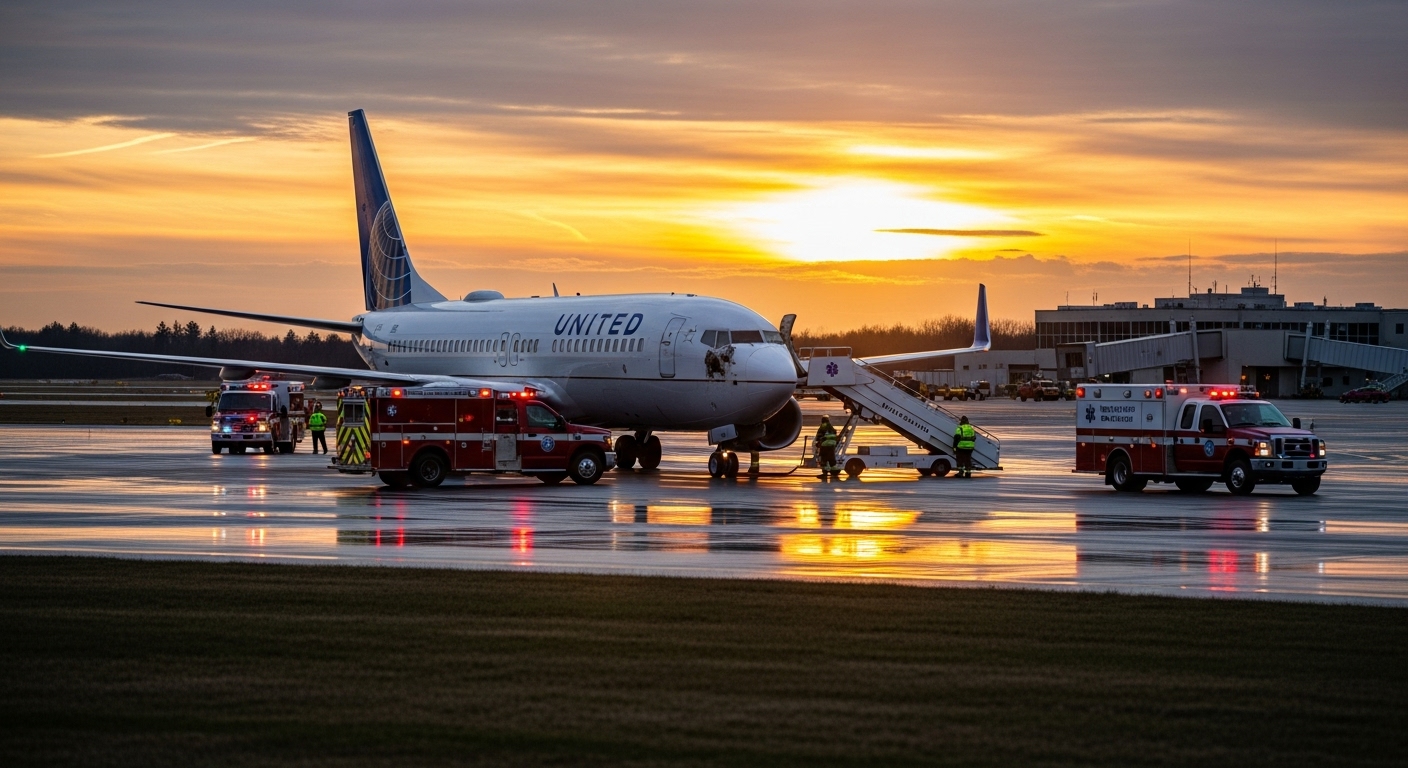
A United Airlines Boeing 737 was forced to divert after pilots discovered a cracked windscreen mid-flight. The NTSB launches an investigation as Boeing faces renewed scrutiny over aircraft safety standards in the U.S. aviation industry.
United Airlines Boeing 737 Diverts After Cracked Windscreen Mid-Flight; NTSB Opens Full-Scale Investigation
A routine United Airlines flight turned into a tense mid-air emergency after the cockpit windshield of a Boeing 737 aircraft cracked during flight, forcing pilots to make an emergency diversion. The National Transportation Safety Board (NTSB) has launched a formal investigation into the incident, renewing public scrutiny of Boeing’s ongoing safety record and aircraft reliability.
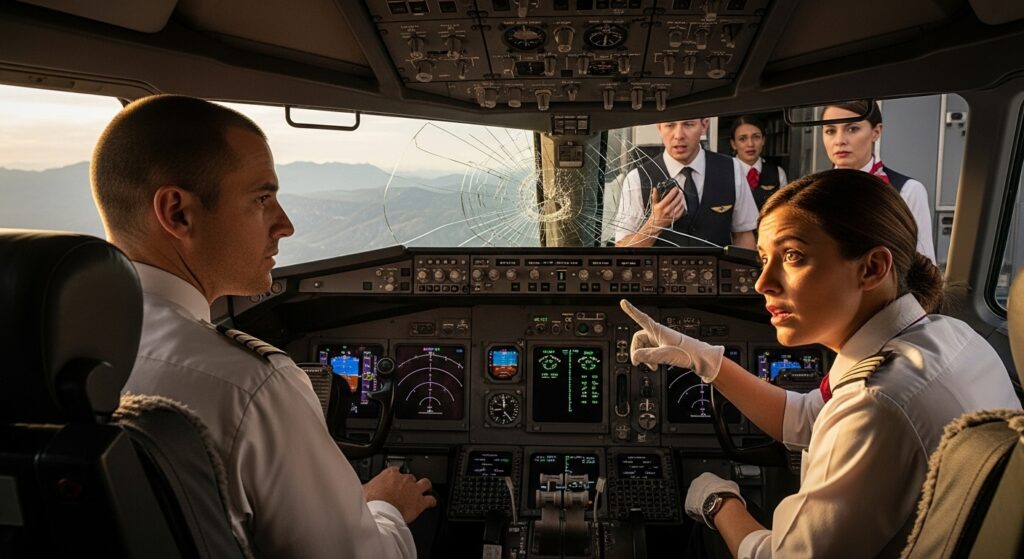
The Incident: A Routine Flight Turns Risky
The incident occurred earlier this week when United Flight UA2264, en route from Denver to Portland, reported a sudden crack in the cockpit windshield at approximately 30,000 feet. Passengers described hearing a loud “pop” followed by visible stress lines across the glass.
While the cabin pressure remained stable, pilots immediately declared an emergency and diverted to Salt Lake City International Airport as a safety precaution. The aircraft landed safely without injuries. According to United Airlines, passengers were rebooked onto another flight, and the affected aircraft was removed from service for inspection.
The airline issued a short statement, saying, “Our flight crew followed all standard procedures after identifying a potential safety issue. The aircraft landed safely, and our maintenance team is conducting a thorough inspection.”
NTSB and FAA Step In
The NTSB, in coordination with the Federal Aviation Administration (FAA), is now examining whether the windshield crack resulted from a manufacturing defect, pressure stress, or thermal shock caused by changing altitudes.
An NTSB spokesperson confirmed: “We are analyzing data from the flight recorder and maintenance logs. Our focus is on determining whether this was an isolated incident or part of a broader pattern involving similar Boeing 737 models.”
Initial assessments suggest the outer pane of the cockpit windshield suffered damage while the inner layers maintained cabin pressure — preventing catastrophic decompression. Still, investigators are keen to identify the root cause, as several similar reports have surfaced in recent years involving various airlines operating Boeing 737 models.
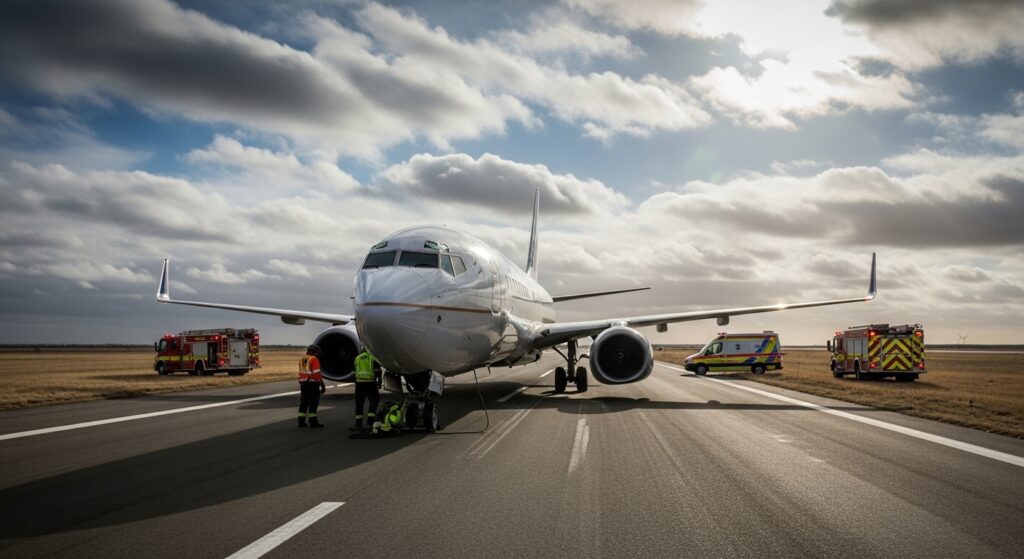
NBoeing’s Safety Record Under Renewed Fire
This latest event comes amid a wave of scrutiny over Boeing’s quality control and production practices. Earlier this year, multiple airlines, including Alaska and Southwest, reported maintenance-related issues involving Boeing’s 737 and 787 models, prompting calls for stricter oversight.
Aviation analyst Mark Rosenfeld notes, “While Boeing remains a global aviation leader, incidents like these chip away at passenger confidence. Even minor mechanical failures on Boeing aircraft now attract significant attention due to the company’s recent safety challenges.”
Since the 737 MAX crisis of 2018–2019, Boeing has been under continuous observation by the FAA. Despite introducing updated safety protocols, the company continues to face questions over manufacturing consistency — especially after whistleblower reports earlier in 2025 alleged production shortcuts at some U.S. facilities.
The Human Element: Pilots and Passengers Praise Calm Response
Passengers onboard UA2264 praised the pilots and cabin crew for maintaining composure and transparency throughout the incident. “The captain came on the intercom and told us exactly what was happening. It was scary for a few minutes, but they handled it perfectly,” said one traveler on social media.
United Airlines confirmed that the flight’s pilots had more than 20 years of combined cockpit experience, which contributed to their calm handling of the emergency. Aviation safety experts often highlight that cockpit communication and crew training remain the most effective defense against in-flight crises — even when technology falters.
What Causes Aircraft Windshield Cracks?
Aircraft windshields are made of multiple reinforced glass and plastic layers, capable of withstanding extreme temperature changes and high-altitude pressure differences. Cracks can develop from:
- Thermal stress caused by sudden temperature shifts.
- Bird strikes or airborne debris impacts.
- Manufacturing or installation defects.
- Electrical heating element failures within the windshield structure.
According to FAA data, cockpit windshield cracks occur in approximately one out of every 10,000 flights, and most are minor. However, due to safety regulations, any visible crack — no matter how small — requires immediate attention and, in many cases, diversion.
The Bigger Picture: U.S. Aviation and Technology Leadership
The U.S. aviation industry remains at the forefront of aerospace innovation, with companies like Boeing, Lockheed Martin, and SpaceX pioneering safety technologies, artificial intelligence-assisted diagnostics, and predictive maintenance systems.
Industry insiders believe this latest event could accelerate the integration of AI-powered flight monitoring — systems capable of detecting micro-fractures or component fatigue before visible signs appear. Such advancements are expected to play a major role in the next generation of Boeing and Airbus aircraft, improving early-warning accuracy and reducing maintenance-related flight delays.
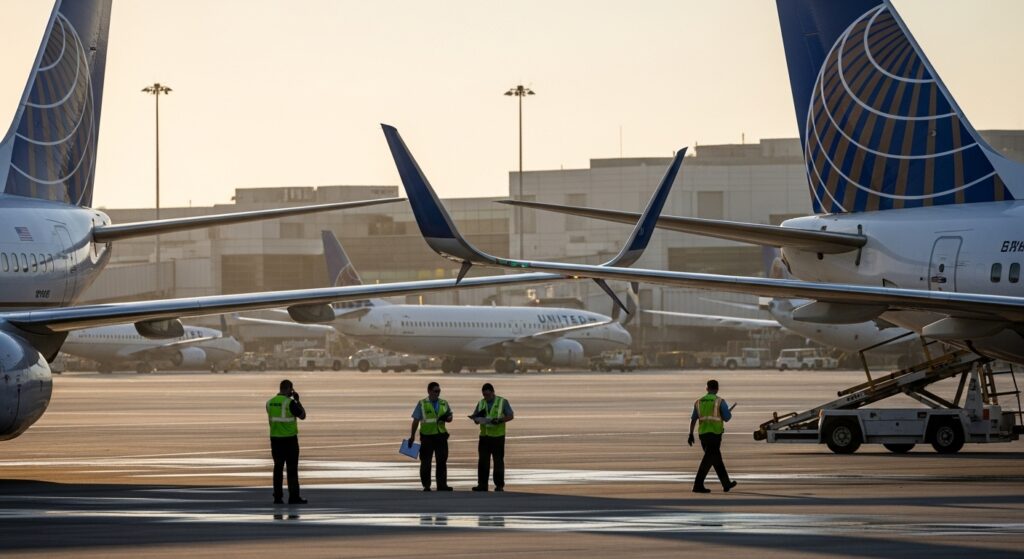
Other United Airlines Incidents
The cracked windshield came just a day before another unrelated event involving two United Airlines aircraft that made contact on the tarmac at Chicago O’Hare International Airport. One plane’s wing reportedly clipped another’s stabilizer during ground operations. Fortunately, no injuries were reported in that case either.
These incidents occur amid broader aviation challenges, including a partial government shutdown that has led to delays across major airports as TSA officers and air traffic controllers continue working without pay.
Despite these disruptions, United Airlines emphasized that safety remains its top priority and that it is fully cooperating with federal investigators to ensure the issue is properly addressed before the aircraft returns to service.
Global Implications and Traveler Confidence
While this incident was contained without injuries, the optics remain significant. The NTSB’s findings could influence international aviation safety standards, especially in regions adopting U.S.-based certification systems.
Travel analyst Dana Schultz explains, “Passengers are now far more informed about airline safety. Even a single emergency landing can affect booking trends. How Boeing and United handle transparency in the coming weeks will determine how quickly consumer confidence rebounds.”
United Airlines has pledged to cooperate fully with investigators and release a public report once the findings are finalized. Meanwhile, Boeing has not issued a detailed statement but reiterated its “commitment to the highest levels of safety and quality assurance.”
UnitedAirlines #Boeing737 #AviationNews #FlightSafety #NTSB #Boeing #AviationTechnology #AircraftMaintenance #USATravel #AirlineUpdates
Frequently Asked Questions (FAQs):
Q1. What exactly happened on United Airlines Flight UA2264?
A cockpit windshield cracked mid-flight, prompting an emergency landing in Salt Lake City. No injuries were reported.
Q2. Was this aircraft a Boeing 737 MAX model?
The aircraft involved was a Boeing 737-800, part of Boeing’s Next Generation series — not the MAX model.
Q3. What is the NTSB investigating?
The NTSB is examining whether the crack was caused by pressure fatigue, manufacturing faults, or environmental stress factors.
Q4. How common are cockpit windshield cracks in aviation?
They are rare but not unheard of. Safety protocols ensure that such issues result in precautionary landings rather than major emergencies.
Q5. Does this affect Boeing’s global reputation?
While Boeing remains a global leader, each incident reinforces ongoing concerns about production consistency and safety oversight.
Q6. What measures are airlines taking to prevent future occurrences?
Airlines are adopting predictive maintenance and AI-based monitoring to identify structural weaknesses before they become flight risks.