
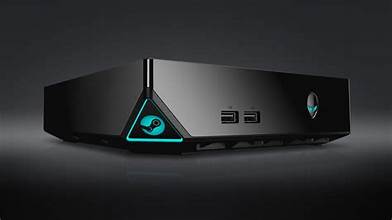
Valve returns to the console arena with the Steam Machine—a compact living-room gaming PC running SteamOS, launching early 2026. Explore specs, strategy, ecosystem implications and whether this time it can succeed.
1. Introduction: Valve’s Big Return to Living-Room Gaming
In November 2025, Valve Corporation made a major announcement: the launch of the new Steam Machine, a living-room gaming console set for early 2026. This isn’t just a new box—it’s part of a broader hardware ecosystem that includes the new Steam Controller and the upcoming Steam Frame VR headset. The Verge+2Windows Central+2
For many gamers, this marks a return of Valve’s console ambitions after the original Steam Machines (circa 2015) faltered. With lessons learned, SteamOS matured, and the streaming and ecosystem environment more favourable, Valve believes the time is right. The Verge+1
By framing the Steam Machine as a hybrid between console simplicity and PC flexibility, Valve enters a space dominated by PlayStation and Xbox—but with a distinctly different philosophy.

2. What is the Steam Machine?
2.1 Form Factor & Design
The Steam Machine is described as a compact cube (roughly six inches or ~15 cm on a side) designed to sit in a living-room environment next to a TV. Windows Central+1 Unlike the bulky PCs that dominate high-end gaming, Valve emphasises quiet operation and living-room-friendly aesthetics. The Verge The front features swappable magnetic panels (one shown with wood finish) and a subtle RGB bar behind venting for cooling.
2.2 Hardware & Performance
According to early specs:
- CPU: AMD custom Zen 4, six cores / twelve threads. The Verge+1
- GPU: Semi-custom AMD RDNA 3 graphics, 28 compute units, 8 GB of VRAM. The Verge+1
- RAM: 16 GB unified. Diario AS+1
- Storage options: 512 GB NVMe SSD or 2 TB in a higher-end variant. Diario AS+1
- Ports include HDMI 2.0, DisplayPort 1.4, USB-C (10 Gbps), USB-A, Gigabit Ethernet, Wi-Fi 6E, Bluetooth 5.x. The Verge+1
Valve claims that the Steam Machine offers about six times the horsepower of the Steam Deck and targets 4K/60 fps performance on AAA titles via upscaling and Proton (Linux compatibility layer). Windows Central+1
2.3 Software & Ecosystem
The console runs SteamOS (an Arch-based Linux) and leverages Proton to allow Windows games to run. The Verge+1 Valve emphasises this as the biggest difference from traditional consoles: use your existing Steam library, access mods, install alternative clients—even install Windows if you want. Windows Central
2.4 Accessories & Family Hardware
Alongside the Steam Machine, Valve announced:
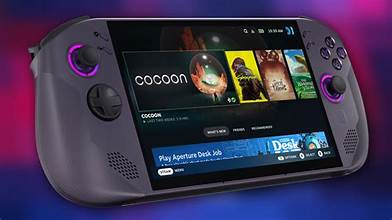
- A revamped Steam Controller featuring dual touchpads, extra shoulder buttons and up to 35 hours of battery life. Tom’s Guide
- The Steam Frame standalone VR headset, shown at the same event, highlighting a unified hardware vision. PC Gamer+1
3. Why This Launch Matters
3.1 Blurring Console & PC Boundaries
Traditional consoles lock you into store ecosystems and fixed hardware. PCs offer flexibility but require tinkering. Valve’s Steam Machine aims to deliver console ease (plug-and-play, TV-based gaming) with PC freedom (library portability, mods, openness). This hybrid could appeal to both demographics.
3.2 Second Time’s a Charm for Valve
Back in 2015, Valve’s first Steam Machines failed because of high cost, fragmentation (multiple OEMs) and unclear target audience. Today, with the success of the Steam Deck, matured Proton compatibility, and firmware/software ecosystem matured, Valve is better placed to succeed. The Verge
3.3 Competitive Implications
With the Steam Machine, Valve positions itself to challenge Microsoft, Sony and even PC gaming. The company emphasises that their device will run AAA games and may meet console-class performance, if not surpass it. Pure Xbox+1
3.4 Value Proposition & Library Leverage
One of Valve’s biggest advantages: existing Steam library with hundreds of millions of users. The Steam Machine leverages this, allowing gamers to access their existing PC games from the sofa. That prevents fragmentation and builds on existing investment in Steam.
4. Key Features & Highlights
4.1 Living-Room Ready
- Flat-pack cube design, quiet cooling system. The Verge
- Focus on TVs: outputs and upscaling for 4K.
- Swappable front panel for customisation.
4.2 Console-Class Specs with PC Freedom
- Benchmarks in early review: one test of Cyberpunk 2077 showed ~65 fps at 4K (upscaled) settings. The Verge
- Expandability: SSD upgrade possible (M.2 2280/2230) in prototype. The Verge
4.3 Steam Library + Mods + Flexibility
- Use your own Steam account, play your Steam library.
- Support for streaming from Deck, PC or mobile via Steam Link. Tom’s Guide
- Option to install Windows or other OS if desired, though Valve emphasises SteamOS primary.
4.4 Unified Hardware Ecosystem
The new hardware lines share design language, accessories are compatible across Machine, Controller and Frame. Valve calls them a “family of devices”. PC Gamer
5. Challenges & Risks
5.1 Price Uncertainty
Valve has not confirmed pricing yet. Some early reports suggest comparable to entry-level PC build rather than typical console price. Diario AS+1 If pricing is too high, mainstream adoption may suffer.
5.2 Game Optimization & Developer Support
While Valve emphasises compatibility via Proton, console gamers expect press-digit-ready optimisation. Developers may still prioritise PS5/Xbox exclusives. If games underperform or there’s fragmentation, the value proposition weakens.
5.3 Competition & Timing
Valve enters a crowded field: next-gen consoles (PS5 Pro, Xbox Two) around the corner; high-end PCs continue to evolve. The Machine must hit at the right performance/price/time to carve space.
5.4 Hardware Lifecycle & Support
Valve’s previous hardware ventures had mixed results (the original Steam Machines, Valve Index). To succeed, Valve must commit to long-term support, firmware updates, driver management and quality ecosystem.
5.5 Marketing & Consumer Perception
The Steam Machine must convince gamers it’s “console simple” – plug in and play – while also delivering “PC power”. If it ends up being just “a PC in a box” with console price and PC complications, mainstream interest may be limited.
6. Strategic Implications for Valve & the Industry
6.1 Valve’s Hardware Ambitions
The launch shows Valve is no longer just a PC-software company but a full hardware/ ecosystem player. By controlling hardware, OS, storefront, and library, Valve can capture more value and create tight integration.
6.2 Console Market Evolution
The clear distinctions between console, PC and handheld blur further. Valve’s hybrid approach may shift expectations: future consoles may need to be more open, modular, or PC-venue inclusive.
6.3 Platform Ownership and User Power
Valve’s message focuses on user-ownership (your Steam library, cross-device access, mod support). It challenges the closed-walled garden model of traditional consoles. If successful, we may see other console-makers adopt more open standards.
6.4 Impact on Games, Mods & Indie Scene
With greater flexibility, modding and indie games may find a stronger living-room presence. Valve’s ecosystem could become more appealing to smaller studios seeking access beyond PC and conventional consoles.

7. What to Watch Ahead
7.1 Launch Timeline & Region Availability
Valve targets release “early 2026” for the Steam Machine, Controller and Frame. Windows Central+1 Watch for pricing announcements, pre-orders, region availability (likely same regions as Steam Deck launch).
7.2 Price Reveal & Editions
Will Valve release entry, mid and high-end versions? What bundle options with Controller or Frame? Will there be partner OEM versions?
7.3 Software Roll-Out & Verified Titles
Valve plans a “Steam Machine Verified” program similar to Steam Deck verified titles to indicate which games are optimised. Watch which key AAA titles bear this mark at or near launch.
7.4 Accessory and Ecosystem Support
Third-party controllers, headsets, docks, and streaming accessories will help. Also, whether the system integrates other stores or cross-platform features (emulators, media apps) may affect appeal.
7.5 Competitive Response
How will PlayStation and Xbox react? Will they emphasise exclusives, deeper integration, or highlight the closed-nature of Valve’s device? Will PCs get cheaper or gaming subscription models shift?
8. First Impressions & Expert Commentary
Reviewers and hardware analysts are cautiously optimistic. Early hands-on suggests Valve managed to pack strong performance and smart engineering into a tiny cube while keeping living-room friendly features. The Verge One analyst noted:
“This looks like Valve’s moment to show what SteamOS can be in the living-room. If they hit price and performance, they might reshape what a console can be.”
However, sceptics remain for reasons such as price, optimisation, fragmentation and the challenge of convincing mainstream console buyers. One Reddit commentator summed up:
“Its weaker than a base PS5 in some respects … if it’s expensive, it may be dead on arrival.” Reddit
That tension between ambition and reality will define the Machine’s success.
9. Wider Implications & Why It Matters
9.1 For Gamers
For PC gamers, this means their library follows them to the sofa. For console gamers, it increases choice and pushes innovation. For casual gamers, a plug-and-play PC-like console may become accessible.
9.2 For Game Industry
If the Steam Machine gains traction, game development may shift: fewer compromises between PC and console versions, mods and indie titles may get more living-room presence, and hardware vendors may adopt more open models.
9.3 For Hardware & Platform Economics
Valve moving into full hardware ecosystem (Machine, Controller, Frame) illustrates a move beyond “software only”. It suggests companies may increasingly control hardware, OS and store—raising questions about competition, exclusivity, platform power and consumer choice.
10. Final Thoughts
The announcement of the Steam Machine marks a bold turning point for Valve and for the gaming industry. It’s not just another console—it is a statement: the living-room gaming device of the future must be as open as a PC and as seamless as a console. Whether it achieves that, remains to be seen—but the ingredients are there: matured SteamOS, proven hardware lineage (Steam Deck), strong library, modular design and an ecosystem vision.
If Valve succeeds, we may look back on this moment as the convergence of PC and console gaming into one unified platform. If they fail, the Steam Machine may be another niche product in the long list of ambitious but under-adopted hardware. Whatever happens, the industry will watch closely.
For gamers, this is an exciting time: more options, stronger competition, and innovation that could benefit everyone. Keep an eye on pre-order announcements, pricing, bundle deals, software compatibility lists and launch-day performance reviews—because the Steam Machine may just be the console that changes everything.
Sidebar Comparison: Valve Steam Machine vs PlayStation 5 Pro vs Xbox Series X2 vs High-End PC
| Feature | Valve Steam Machine (2026) | PlayStation 5 Pro (2025) | Xbox Series X2 (2026) | High-End Gaming PC (2025) |
|---|---|---|---|---|
| CPU | Custom AMD Zen 4 (6 cores / 12 threads) | AMD Zen 3+ 8 core | Custom AMD Zen 4 8 core | Intel i9-14900K / Ryzen 9 7950X |
| GPU | AMD RDNA 3 (28 CUs, 8 GB VRAM) | AMD RDNA 3 (60 CUs, 16 GB) | AMD RDNA 4 (64 CUs, 16 GB) | RTX 4080 / RX 7900 XTX |
| RAM | 16 GB Unified Memory | 16 GB GDDR6 | 16 GB GDDR6 | 32 GB DDR5 |
| Storage | 512 GB–2 TB NVMe SSD | 1 TB SSD | 1 TB SSD | 2–4 TB SSD |
| Operating System | SteamOS 4.0 (Linux-based) | PlayStation OS Pro | Xbox OS 2.0 | Windows 11 |
| Performance Target | 4K / 60 FPS (Upscaled) | 4K / 60 FPS Native | 4K / 60 FPS Native | 4K–8K / 120 FPS |
| Backward Compatibility | Full Steam Library (PC games) | PS4 & PS5 titles | Xbox One & Series titles | Full library |
| Mod Support | Yes (Proton + Linux) | Limited | Limited | Full |
| VR Support | Steam Frame VR Compatible | PS VR2 | Meta / Mixed Reality | All major headsets |
| Cloud Integration | Steam Cloud + Link Streaming | PS Plus Cloud Gaming | Game Pass Cloud | NVIDIA GeForce Now / Steam Link |
| Price (Est.) | $599 – $799 (USD) | $699 | $749 | $1,500 + |
| Target Audience | PC + Console Hybrid Gamers | Console Loyalists & Exclusive Fans | Cloud + Console Players | Enthusiast PC Gamers |
Quick Insight:
Valve’s Steam Machine sits strategically between consoles and PCs—targeting flexibility, ownership, and ecosystem freedom rather than raw power alone.
Press-Release Style Snippet
FOR IMMEDIATE RELEASE — November 2025
VALVE ANNOUNCES STEAM MACHINE: THE FUTURE OF LIVING-ROOM GAMING
Bellevue, WA — Valve Corporation has officially unveiled its next-generation Steam Machine, a powerful living-room console designed to bridge the gap between PC and console gaming. Running the latest SteamOS 4.0 and featuring a custom AMD Zen 4 CPU paired with RDNA 3 graphics, the Steam Machine offers smooth 4K gaming and full access to the entire Steam library.
Valve also introduced the redesigned Steam Controller 2 and the Steam Frame VR headset, forming a unified hardware family for 2026.
“The Steam Machine is about giving players freedom — the freedom to play, modify, and own their games on their terms,” said Gabe Newell, Valve CEO.
Set to launch in early 2026, the Steam Machine aims to redefine how gamers experience the living room — open, powerful, and fully integrated with Valve’s ecosystem.
Stay tuned for official pricing, preorder information, and verified game lists at store.steampowered.com.
Key Takeaways: Valve’s Steam Machine Announcement
- Valve officially re-enters the console market with the Steam Machine, bridging the gap between console convenience and PC flexibility.
- Runs on SteamOS 4.0, offering full access to the Steam gaming library and PC-level mod support.
- Features a custom AMD Zen 4 CPU and RDNA 3 GPU, promising 4K performance at an affordable price.
- Introduces a new Steam Controller 2 and Steam Frame VR headset, emphasizing cross-platform play and immersive gaming.
- Aims to compete with the PlayStation 5 Pro and Xbox Series X2, but focuses on openness, customization, and user control.
- Expected launch in early 2026, with preorders likely to open through Valve’s official store and select partners.
How to Preorder the Steam Machine
As of November 2025, Valve has not yet opened official preorders, but here’s how to stay updated and prepare:
- Visit the Official Store:
Bookmark store.steampowered.com — Valve will release preorder links, product bundles, and regional pricing here first. - Subscribe to Steam Updates:
In your Steam account settings, enable notifications for “Steam Hardware Updates.” This ensures you get early alerts for preorder access. - Follow Valve on Social Channels:
Stay tuned via official Valve, Steam, and Gabe Newell handles on X (Twitter), YouTube, and Instagram for hardware teasers and live demos. - Retailer Partners:
Valve has previously collaborated with Best Buy, GameStop, and Amazon for hardware sales. Expect bundles that include controllers, headsets, and game credits. - Early Adopter Bonus (Expected):
Based on prior releases like the Steam Deck, early adopters may receive Steam Wallet credits or exclusive digital badges.
Expert Insight: Why Valve’s Move Matters
Valve’s return to hardware signifies a broader evolution in the gaming industry — one where open ecosystems and PC-grade hardware dominate living rooms.
The Steam Machine 2026 is more than a console; it’s a statement about gaming freedom, ownership, and digital accessibility.
Unlike closed ecosystems (Sony or Microsoft), Valve empowers players to customize, upgrade, and integrate their experiences — aligning with the ongoing trend toward cross-platform gaming and digital independence.
In short, Valve isn’t just launching a console — it’s challenging the industry’s boundaries once again.
Frequently Asked Questions (FAQs)
1. What is the Valve Steam Machine?
The Valve Steam Machine is a next-generation gaming console developed by Valve Corporation, designed to combine the power of PC gaming with the simplicity of a console. Running on SteamOS 4.0, it offers access to thousands of Steam games, full controller support, and PC-like customization options — making it a unique hybrid between a gaming PC and a traditional console.
2. When will the Steam Machine be released?
Valve has not confirmed an official release date, but industry reports suggest a global launch in early 2026. Preorders are expected to open in mid-2025 through Valve’s official store and select retail partners such as Best Buy, GameStop, and Amazon.
3. How much will the Steam Machine cost?
While pricing has yet to be announced, analysts predict the Steam Machine will launch at $499 for the base model and around $699 for a premium version with enhanced storage and performance specs. Valve may also introduce bundle offers including controllers, VR headsets, or Steam Wallet credits for early buyers.
4. What are the Steam Machine’s main specs?
The Steam Machine is expected to feature a custom AMD Zen 4 CPU, RDNA 3 GPU, 16 GB DDR5 RAM, and 1 TB SSD storage. It supports 4K resolution at 120Hz, ray tracing, Wi-Fi 6E, and Bluetooth 5.3, all optimized for fast game loading and smooth performance on SteamOS.
5. Will the Steam Machine support VR gaming?
Yes. Valve has confirmed full compatibility with its upcoming Steam Frame VR headset, as well as other major VR platforms like Meta Quest and HTC Vive. SteamOS 4.0 includes built-in drivers for VR streaming, motion tracking, and low-latency rendering.
6. Can users install other operating systems on the Steam Machine?
Absolutely. In line with Valve’s open-source philosophy, the Steam Machine allows users to install Windows, Linux distributions, or other software alongside SteamOS. This makes it ideal for gamers, streamers, and developers who want flexibility in their system setup.
7. How is the Steam Machine different from the Steam Deck?
While both devices run SteamOS, the Steam Deck is a portable handheld console, whereas the Steam Machine is a full-fledged home gaming system built for 4K TV and desktop setups. The Steam Machine offers more power, upgrade options, and better cooling, making it a direct competitor to consoles like the PlayStation 5 Pro and Xbox Series X2.
8. Will my existing Steam library work on the Steam Machine?
Yes. All your purchased Steam games are automatically available to download and play on the Steam Machine. Additionally, the system supports Steam Cloud saves, Remote Play, and cross-platform multiplayer for seamless transitions between devices.
9. Does the Steam Machine require an internet connection?
An internet connection is recommended but not required. Players can install and play offline games freely, though online connectivity is necessary for multiplayer modes, cloud syncing, and game updates.
10. How does Valve plan to compete with Sony and Microsoft?
Valve’s strategy is based on open access, affordability, and player freedom. Unlike Sony or Microsoft’s closed ecosystems, the Steam Machine encourages customization, modding, and third-party integrations — appealing to both casual gamers and PC enthusiasts.
11. Will developers create Steam Machine–exclusive games?
Valve has not announced any exclusives yet, but developers are expected to optimize popular titles for SteamOS performance. Major studios including CD Projekt Red, Ubisoft, and Bethesda are already collaborating to ensure compatibility with the new console architecture.
12. How does SteamOS 4.0 enhance the gaming experience?
SteamOS 4.0 offers a refined Big Picture interface, faster boot times, enhanced cloud streaming, and native support for DirectX 12 and Vulkan APIs. It’s built to deliver console-level ease with the versatility of a desktop operating system — merging the best of both worlds.
13. Can the Steam Machine be used for non-gaming purposes?
Yes. Users can browse the web, stream movies, use productivity tools, and even install media apps like Netflix, Spotify, or YouTube through SteamOS or Windows. This makes it not just a gaming console, but a complete entertainment and productivity hub.
14. Where can I buy the Steam Machine when it’s released?
Once launched, the Steam Machine will be available for purchase through:
- Steam’s Official Website
- Amazon.com
- Best Buy
- GameStop
- Select international gaming retailers
Valve may also introduce direct-order bundles with limited-edition accessories and collector’s editions.
15. What does this mean for the future of gaming consoles?
The Steam Machine represents a shift toward open, flexible gaming ecosystems, where players have more control over hardware and software choices. Valve’s approach could redefine the console market, pushing competitors toward cross-platform compatibility, user ownership, and innovation beyond exclusivity.
Final Thought
The Valve Steam Machine is shaping up to be one of the most exciting developments in the gaming industry. With its blend of PC performance, console accessibility, and open-source flexibility, it could transform how players experience games in 2026 and beyond — proving once again that Valve’s innovation knows no limits.