
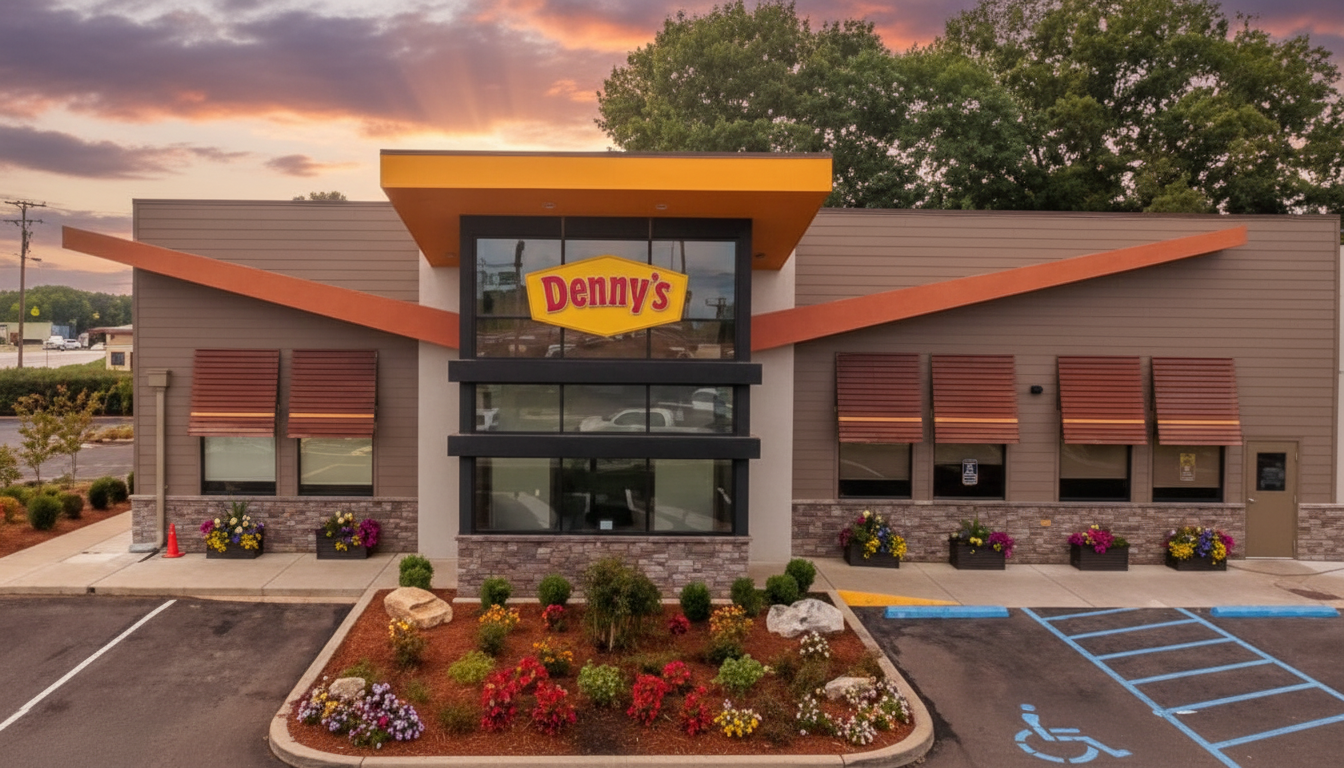
Denny’s has agreed to be taken private in a $620 million deal, offering shareholders $6.25 per share and marking a major transaction in the casual-dining sector. What the deal means for Denny’s and the industry.
Denny’s $620 Million Deal: What’s Behind It and Where It’s Headed
Late in 2025, dining-chain giant Denny’s announced it will be taken private in a deal valued at approximately $620 million, including debt. Reuters+2AP News+2 The deal marks a major shift for the iconic American diner brand and signals both new opportunity and realignment within the restaurant sector.
Under the agreement, a consortium led by private-equity firm TriArtisan Capital Advisors (which owns TGI Fridays) and including investment firm Treville Capital and franchise-operator Yadav Enterprises (one of Denny’s largest franchisees) will acquire the company and take it off the public market. AP News+1 Shareholders will receive $6.25 per share in cash — representing a premium of roughly 52% over the stock’s closing price prior to the announcement. MarketWatch The transaction is expected to close in the first quarter of 2026, subject to shareholder vote and regulatory approvals. Reuters+1

Why Now? A Confluence of Challenges and Opportunity
To understand why Denny’s accepted the deal, it’s important to examine the context:
1. Operational Headwinds:
Denny’s has faced pressure from shifting consumer dining habits, rising costs, and intensifying competition — particularly from newer breakfast-and-brunch chains. AP News Same-store sales have declined in recent quarters, and the brand announced plans to shutter up to 150 underperforming locations. The Sun+1
2. Strategic Review and Activist Pressure:
The board reportedly evaluated more than 40 potential buyers, indicating a full strategic-alternatives review. AP News Earlier activist-investor involvement had also pressed for enhanced shareholder returns. Investors
3. Private-Equity Interest in Dining Assets:
The transaction comes amid a wave of buy-outs in the restaurant sector, as private capital seeks brands with stable cash flows and franchise leverage. Denny’s fit that mold — despite its challenges. Reuters
4. Franchisee-Led Acquirer:
Uniquely, one of the buyers is a major Denny’s franchisee (Yadav Enterprises), suggesting the new owners aim to lean into the franchise model, optimize operations and invest where needed rather than purely extract value.
What the Deal Means for Denny’s
For shareholders, the deal represents an immediate 50%+ premium — a strong outcome given prior share-price underperformance. Investors who held the stock received value today instead of lingering risk in the public markets.
For the brand, entering private ownership may offer breathing room. Freed from quarterly earnings pressures and public-market scrutiny, Denny’s management can focus on long-term strategic initiatives: updating stores, improving menu relevance, closing weak units, and delivering traffic. CEO Kelli Valade has noted the board believed the deal is the “best path forward for the company.” AP News
For franchisees, the involvement of Yadav Enterprises may signal deeper alignment with Denny’s operator base and a focus on improving system profitability rather than brand expansion alone. The buyer consortium emphasised their intention to support long-term growth and resource investment. AP News
For the competitive landscape, this deal may trigger broader consolidation in casual dining, as chains grapple with cost inflation, evolving consumer preferences (more delivery, more brunch, more value), and the need to invest in tech and remodels.

Key Terms and Financial Metrics
- Target value: ~$620 million including debt. Reuters
- Cash per share: $6.25. AP News
- Premium: ~52% over pre-announcement share price. MarketWatch
- Timing: Expected close Q1 2026. fsrmagazine.com
- Share reaction: Stock jumped ~48% to 50% following announcement. The Economic Times
Strategic Implications: What’s Likely Next
Focus on store-footprint rationalisation: Denny’s has been closing low-volume units; under private ownership it may accelerate portfolio optimisation, remodel remaining stores and invest in experience upgrades.
Menu and value-proposition renovation: With consumer cost-sensitivity high, Denny’s may double down on value menus, limited-time offers and digital upgrades (mobile ordering, delivery). Past promotions — like BOGO Grand Slam breakfasts — indicate the brand’s willingness to act. The Sun
Franchise economics: Private ownership may prioritise improving unit economics for franchisees: upgrading high-traffic locations, shedding underperformers and reducing system-wide cost burden. That in turn may increase overall brand health.
Brand relaunch potential: Freed of public-market pressures, Denny’s might quietly invest in repositioning (new logos, store design, day-part expansion) rather than flashy turn-around announcements.
Reduced reporting burden: As a private company, quarterly earnings disclosures will cease. Management can take a multi-year view rather than manage around the earnings calendar.

Risks and Watch-Points
Integration and execution risk: Even though the acquirer includes experienced restaurant operators, turning around a large national chain is complex. Legacy systems, labour constraints and consumer behaviour shifts may slow results.
Macro-economic pressures: Inflation, labour costs and supply-chain disruptions remain significant threats for dining chains. The new owners must ensure the business model is resilient to cost shocks.
Franchisee alignment: While one buyer is a major franchisee, ensuring all franchisees invest and operate optimally remains critical. Conflict or under-investment by system units could hamper turnaround plans.
Financial engineering: Private-equity deals often rely on operational improvement to justify the acquisition price. If Denny’s growth remains stagnant, the new owners face pressure to cut costs or divest assets.
Sector-Wide Context: What This Means for Casual Dining
Denny’s acquisition is a bellwether for the casual-dining sector. With consumers eating out less and prioritising value, many chains face the choice of heavy reinvestment or consolidation.
Private-equity interest in such brands suggests that the sector may see more deal activity, especially for recognizable names with scalable models. Going private can offer companies the flexibility to reinvent themselves without public-market distraction.
For public-market investors, Denny’s exit reduces the universe of publicly-traded mid-tier casual-dining chains. It also raises the bar for remaining public brands: delivering consistent same-store sales growth, value proposition clarity and operational discipline will matter more than ever.
Final Thoughts
The $620 million deal to take Denny’s private marks a major strategic inflection point. For shareholders it delivers immediate value; for the brand and its franchisees it offers a chance at reinvention.
In a dining-landscape increasingly defined by delivery, convenience and value, the new ownership must execute thoughtfully. The combination of a 50% share-premium, franchise-operator acquirer and plan to take the company private reflects belief in the brand’s latent strength — but also recognition of the turnaround work ahead.
For stakeholders, the next year will be critical: as the deal closes in early 2026 and Denny’s embarks on its private journey, success will hinge on execution, consumer trends, franchise alignment and cost-control.
Expert Analysis: What the $620 Million Denny’s Deal Reveals About the Future of Dining
The $620 million buyout of Denny’s marks more than just a financial transaction — it reflects a broader transformation in the global restaurant industry. Experts note that this deal highlights how private equity is reshaping legacy food chains to adapt to an evolving consumer landscape defined by digital ordering, delivery dominance, and post-pandemic dining behavior.
According to market analysts, Denny’s decision to go private is a strategic retreat from the volatility of public markets. As a publicly traded company, Denny’s faced quarterly performance pressure that often conflicted with long-term reinvestment goals. Under private ownership, the brand gains breathing room to modernize its infrastructure, revamp its menu, and optimize franchise models without constant shareholder scrutiny.
From an industry standpoint, the Denny’s acquisition follows a pattern seen with other household names like Subway, Red Lobster, and TGI Fridays — where established but aging brands seek rejuvenation under investment firms with turnaround expertise. The private equity group, led by TriArtisan Capital Advisors, has experience scaling restaurant concepts globally and improving operational efficiency — a sign that Denny’s transformation could focus on quality growth over expansion.
Economically, this move also signals growing investor confidence in the resilience of the casual dining sector, even amid rising costs and changing dining trends. As consumers crave both affordability and comfort food nostalgia, brands like Denny’s remain uniquely positioned to bridge traditional dining with digital convenience. If managed correctly, this deal could not only revive the Denny’s brand but also set a precedent for how classic American diners evolve in the modern restaurant economy.
#DennysDeal #CasualDining #RestaurantMergers #DinerChain #PrivatelyHeld #DiningIndustryNews #FranchiseBusiness #RestaurantTurnaround #BusinessDeals2025 #FoodserviceIndustry
Frequently Asked Questions (FAQs)
1. What is the Denny’s $620 million deal about?
The Denny’s deal refers to a plan by a private equity consortium to acquire and take the restaurant chain private for about $620 million, including debt. Shareholders will receive $6.25 per share in cash — a significant premium over the company’s previous market value. The agreement is expected to close in early 2026 pending regulatory and shareholder approvals.
2. Why is Denny’s being taken private?
Denny’s chose to go private to escape public market pressure and gain flexibility to restructure and reinvest in its brand. The company faced slowing sales, rising operational costs, and competition from new breakfast and diner concepts. Private ownership allows the brand to modernize stores, improve franchise operations, and focus on long-term strategies without quarterly reporting constraints.
3. Who is buying Denny’s?
The buyer group is led by TriArtisan Capital Advisors, a private equity firm known for owning TGI Fridays, along with Treville Capital and Yadav Enterprises, one of Denny’s largest franchise operators. Their combined expertise in restaurant management and franchise growth suggests a focus on operational improvement and system alignment.
4. How will the Denny’s deal affect employees and franchisees?
While no mass layoffs have been announced, Denny’s may streamline its operations and review underperforming locations. Franchisees could see benefits from improved support, investment in technology, and updated brand standards under new ownership. The goal is to strengthen profitability across the system rather than pursue aggressive expansion.
5. What does this deal mean for Denny’s shareholders?
For investors, the deal provides an immediate return — a 50%+ premium compared to the stock’s pre-announcement trading price. Once the transaction closes, Denny’s will be delisted from public exchanges, and shareholders will be paid cash for their holdings.
6. What will happen to Denny’s restaurants after the acquisition?
Most Denny’s locations will continue operating as usual. However, the new ownership group may close weaker stores, remodel outdated units, and refresh the menu. Expect updates to technology, delivery systems, and marketing to keep pace with modern dining trends.
7. Is the Denny’s acquisition part of a larger trend?
Yes. The restaurant industry is seeing a wave of buyouts as private equity investors target brands with recognizable names and franchise-driven cash flow. Similar deals have taken place in the casual-dining and fast-food sectors, as investors seek to capitalize on consumer brand loyalty despite inflation and labor challenges.
8. How does Denny’s plan to stay competitive under new ownership?
Denny’s aims to focus on menu innovation, value pricing, and a better in-store experience. The company may invest in technology, digital ordering, and partnerships to boost sales and efficiency. The new owners are expected to prioritize franchise relations and long-term sustainability rather than short-term expansion.
9. When will the Denny’s sale officially close?
The deal is projected to close in the first quarter of 2026, pending regulatory reviews and shareholder approval. After completion, Denny’s will become a privately held company under the TriArtisan-led group.
10. What does this mean for the restaurant industry?
Denny’s transition to private ownership highlights how major dining brands are evolving amid changing consumer preferences and market volatility. It underscores the growing influence of private investors in shaping the next era of casual dining, where operational efficiency, brand modernization, and franchise stability will define success.