
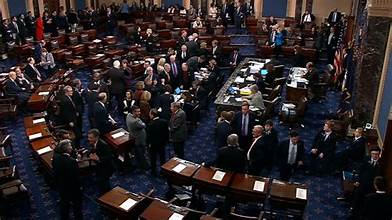
Eight Senate Democrats broke ranks to vote for a government funding deal on Nov 9, 2025, that would end the longest U.S. federal shutdown. Explore who they are, why they flipped, and what this means politically.
Introduction
After 40 days of federal government shutdown—the longest in U.S. history—the United States Senate passed a critical procedural vote on November 9 2025, 60–40, to advance legislation aimed at reopening the government. Crucially, eight Democratic caucus members joined all Republicans (except one) in supporting the motion. This blog explores which Senate Democrats voted to move the deal forward, the political and policy context behind their decision, and what it could mean going forward.
The Breakdown: Who Voted Yes?
According to multiple news reports, the eight Democratic-caucusing senators who voted in favor of the funding measure are:
- Dick Durbin (Illinois)
- Catherine Cortez Masto (Nevada)
- Jacky Rosen (Nevada)
- John Fetterman (Pennsylvania)
- Tim Kaine (Virginia)
- Maggie Hassan (New Hampshire)
- Jeanne Shaheen (New Hampshire)
- Angus King (Maine) – Independent, caucuses with Democrats
These senators broke from the broader Democratic caucus, signaling urgency to reopen government services rather than continue the stalemate. Politico+2WDSU+2
Why They Broke Ranks
1. Constituency and State Pressures
States represented by several of these senators include large numbers of federal workers, military installations, or vulnerable federal aid programs. For example, Tim Kaine cited Virginia’s 150,000 federal employees as a motivating factor. Politico
2. Shutdown Fatigue and Economic Impact
With the shutdown stretching into its sixth week, economic pain was mounting—delayed SNAP payments, federal furloughs, and flight disruptions. Some moderates judged the cost of delay as exceeding their policy priorities. CBS News+1
3. A Deal to Advance Then Fight Later
The deal advanced the funding measure—but did not include the immediate extension of Affordable Care Act (ACA) premium tax credits, a major Democratic demand. Instead, it promised a vote in December. Senators such as Shaheen and King emphasised that dealing with the shutdown now creates a path to negotiate health-care issues later. The Washington Post+1
4. Vulnerable Seats & Political Strategy
Several of these senators are retiring soon or face competitive re-election environments. The decision may reflect political calculations to shield their states from an extended shutdown narrative.
What They Actually Voted On
The November 9 vote was procedural—to invoke cloture and allow consideration of a continuing resolution (CR) and appropriations minibus. It did not by itself reopen the government, but it cleared the way. The deal included:
- Extend funding for the rest of government until late January or early February. Wikipedia
- Roll back mass federal workforce “reduction in force” notices during the shutdown. The Washington Post
- Guarantee a separate vote by mid-December on ACA tax credits (though not a guarantee of passage). The Washington Post
The requirement of 60 votes under the filibuster meant Republicans needed enough Democratic support—hence the significance of this group’s defection. AP News
Political Fallout and Implications
For the Democratic Caucus:
- The vote exposed a rift between party leadership (which largely opposed the motion) and moderate members under pressure from state realities.
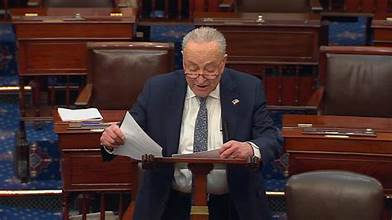
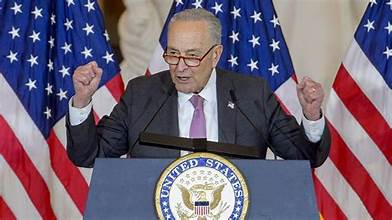
- Leader Chuck Schumer voted against the motion—citing the absence of an ACA credit extension. AP News
- It may reshape how future shutdown standoffs are handled—whether Democrats feel compelled to capitulate early or hold longer for priorities.
For Republicans and the Senate Majority:
- The GOP succeeded in peeling off the exact number of Democrats needed to secure 60 votes, giving them leverage for future negotiations.
- The dynamic signals that funding impasses may increasingly hinge on cross-party defections.
For the Public and Federal Workforce:
- The vote raised expectations that the shutdown will end imminently, providing relief for impacted workers, travelers, and aid recipients.
- However, with final passage still pending, the risk remains until the CR is signed into law.
Potential Scenarios Ahead
Scenario A – Final Passage Happens Quickly:
If the bill passes the Senate and House promptly, the shutdown could end this week, federal employees will be back-paid, and federal aid will resume.
Scenario B – Delay or Amendments Create Setback:
House Republicans or hard-liners may alter the bill or demand concessions, potentially prolonging the shutdown despite the procedural vote.
Scenario C – Health-Care Vote Fails in December:
The promised ACA credits vote could stall later, reigniting tensions, and potentially leading to future shutdown threats.
Key Facts at a Glance
- 8 Democratic-caucusing senators voted to advance the funding measure.
- The vote occurred Nov 9, 2025, at ~10:49 p.m. ET. ABC News
- The motion received exactly the 60 votes needed (59 Republicans + 1 Independent) minus Sen. rand Paul (R-KY) who voted no. CBS News
- The deal does not immediately extend ACA tax credits, but promises a separate vote in December.
- The shutdown is now the longest in U.S. history, emphasizing urgency for resolution. CBS News
Frequently Asked Questions (FAQs)
Q1. How many Senate Democrats voted to end the shutdown?
Eight Democratic-caucusing senators joined Republicans in voting to advance the CR on November 9, 2025. Politico
Q2. Which senators were they?
Dick Durbin (IL), Catherine Cortez Masto (NV), Jacky Rosen (NV), John Fetterman (PA), Tim Kaine (VA), Maggie Hassan (NH), Jeanne Shaheen (NH), and Angus King (ME, Independent) — caucusing with Democrats.
Q3. Did Senate Minority Leader Chuck Schumer support the measure?
No, Schumer voted against the motion, arguing it lacked the ACA credit extension Democrats demanded. The Washington Post
Q4. What did the funding deal include?
It extended government funding temporarily (until late Jan/early Feb), saved federal workers from further mass lay-offs, and locked in a December vote on ACA tax credits.
Q5. Does this vote end the shutdown immediately?
Not yet. The vote cleared the procedural hurdle. Final passage in both chambers and a presidential signature are still required for full reopening.
Q6. Why did some Democrats support the deal despite opposition from leadership?
They cited state-specific pressures (federal workers, SNAP recipients), economic harm, and judged the deal as the best available path forward rather than extend the shutdown indefinitely.
Q7. Could Democrats face backlash for breaking ranks?
Yes. They may face criticism from progressive groups and primary challengers who see the vote as conceding key policy demands in favor of compromise.
#GovernmentShutdown #SenateVote #USPolitics #Democrats #Republicans #CongressNews #Shutdown2025 #FederalFunding #PoliticalAnalysis #WashingtonDC #SenateDemocrats #BreakingNews #CapitolHill #BipartisanPolitics #PolicyDebate #AmericanGovernment #NewsUpdate #CurrentAffairs #USSenate #PoliticalInsight #GovernmentNews #CrisisManagement #LeadershipDecisions #EconomyAndPolitics #PublicPolicy
Conclusion
The decision by eight Senate Democrats to vote with Republicans on November 9 represents a decisive and controversial step toward ending the federal government shutdown. Their votes reflect a fusion of urgency, constituency pressures, and political calculation, while leaving major policy battles—especially over health-care subsidies—still unresolved. Whether this pivot brings relief or fresh conflict depends on how swiftly the legislation moves and whether future commitments are honored.